.jpg?height=55&name=Image%20from%20iOS%20(3).jpg)
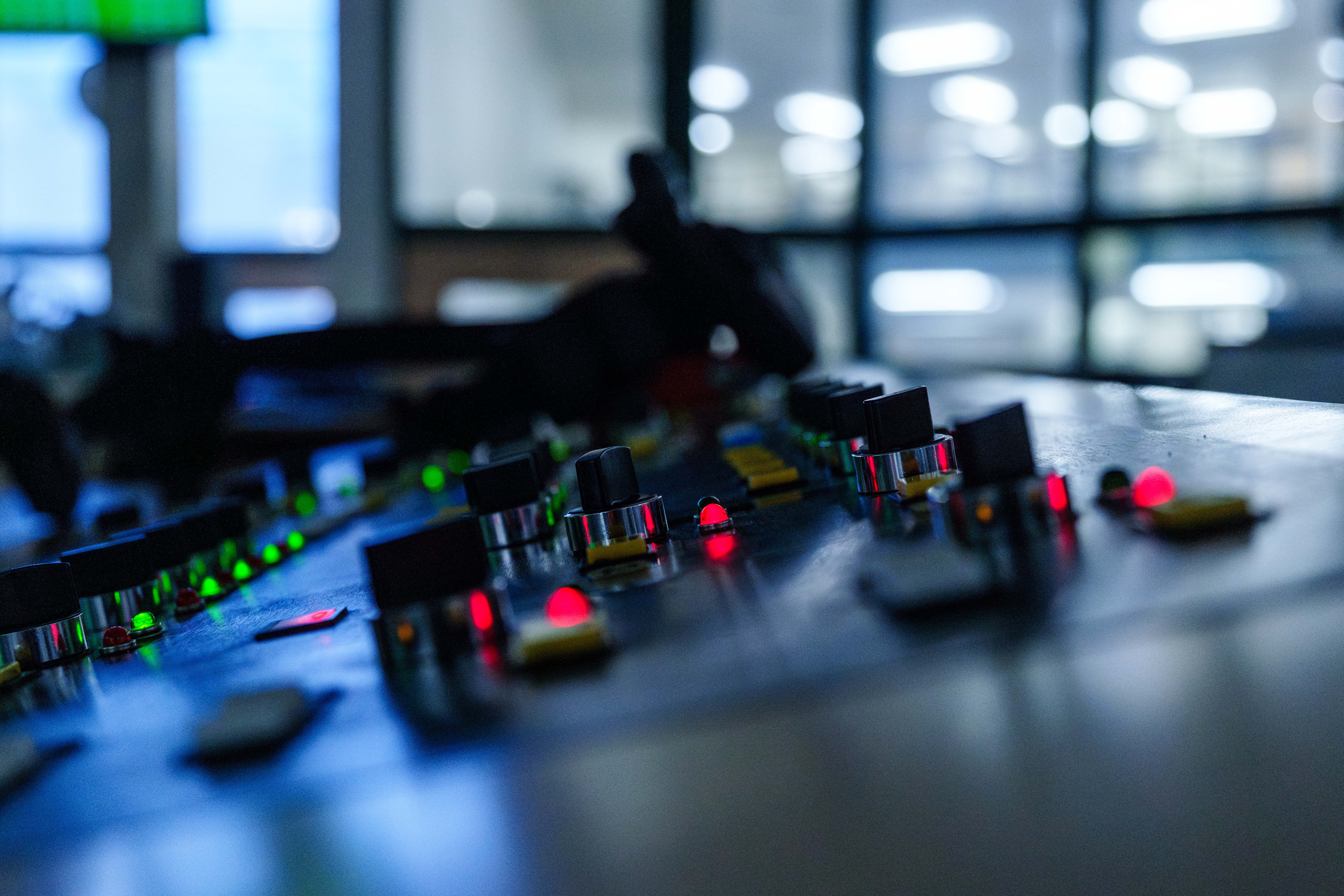
Control room officers are at the center of facility operations. They monitor the overall environment, coordinate officer responses in real time, and act as the eyes and ears of the facility, protecting both staff and inmates.
However, in many jails, control room officers are burdened with more responsibilities than any one person can safely manage. Facilities often try to ease the load—sometimes assigning a civilian to assist during busy shifts—but even then, they’re often pulled in too many directions at once. And when they’re stretched too thin, their focus drifts away from the areas that need it most.
This blog breaks down the problems with overloaded control rooms and provides effective solutions to restore control, clarity, and safety.
The Challenges of an Overloaded Control Room
Control room officers juggle an overwhelming list of responsibilities each day, including their core duties of:
- Monitoring radio traffic
- Operating doors and control panels
- Responding to inmate intercom calls
- Watching camera feeds
- Overseeing the pulse of the overall environment
But these only scratch the surface of their responsibilities. Beyond their routine duties, control room officers frequently address tasks that are typically managed by other staff. These include processing bonds, answering phone calls, following up with volunteers and attorneys, assisting public visitors, and helping with intake for self-surrenders.
While each of these tasks is essential to keeping a facility running smoothly, the dangerous reality remains at the forefront: the more that control room officers are pulled in different directions, the greater the risk that something critical slips under the radar. Even a brief distraction can cause them to miss key movements, interactions, or warning signs.
Surveillance cameras are the first line of defense, especially when officers are interacting directly with inmates or when inmates are unsupervised. But when a control room officer’s attention is pulled in another direction, their eyes drift away from the monitors, increasing the risk of missing critical signs. Some of the most significant indicators that can be easily missed include:
- Inmates passing items between cells or blocks, such as notes or contraband
- Inmate attempts to coordinate diversions, such as creating distractions
- Early indicators of planned assaults, such as repeated tension between specific inmates
- Behavioral changes in inmates, such as notable aggression or withdrawal
Why Your Facility Shouldn’t Depend on Control Room Officers for Activity Logging
A control room officer’s top priority should always be safety and security. But when they’re answering phones, assisting the public, managing intercoms, opening doors, and logging activity, they simply cannot keep their eyes on the cameras. Every time a control room officer pauses to record another officer’s activity, like completing a headcount or passing meals, they’re pulled away from their primary responsibility: monitoring the facility to keep everyone safe.
Imagine this:
Officer Smith walks to D4 to hand a replacement shirt to Inmate Jones, a quick task that doesn’t require entering the block. However, Inmate Williams has a known history of having a strong distaste for Officer Smith.
When Smith opens the door, Williams spots him, distracted and with his hands full. He seizes the opportunity and rushes Officer Smith.
At that same moment, the control room officer turns away from the cameras and toward the computer to complete an incomplete activity log that’s due, taking their eyes off the cameras for only a few moments.
Officer Smith can’t reach his lapel mic. The attack escalates, and it gets ugly.
Had the control room officer been fully focused on the monitors, backup could have been dispatched instantly.
This scenario was 100% preventable. This is why control room officers need to stay attentive to the cameras and avoid attending to a backlog of incomplete CO tasks. Not only do these added responsibilities create gaps in awareness that compromise safety, but the resulting logs often lack the precision facilities need in their documentation.
Strong data capture requires strict attention to detail, highlighting specific names, locations, behaviors, and interactions. Solid, defensible logs include:
- Breakfast meals were passed to all inmates in Block C at 8:00. All inmates accepted their meals except for Inmate Jones, who declined his meal due to not being hungry.
- Laundry was passed to all inmates in Block A at 10:00, and Block B at 11:00. All inmates accepted new clothing and bed sheets.
- Inmate Johnson was pulled at 13:00 by Officer Smith to be transported to court, expected to arrive back at 15:00.
- A Formal Headcount in Block D was conducted at 14:00. All inmates were accounted for except for Inmate Johnson, who is at court, and Inmate Thomson, who is at medical.
All of the examples above provide specific details that paint a realistic picture of what actually happened during these logs. In contrast, poor, weak logs include:
- Meals passed
- Laundry passed
- Inmate pulled for court
- Headcount complete
These examples don’t verify who accepted or declined their meals or laundry, how long inmates were located in different areas, or if all inmates were present during the headcount. Logs such as these are not defensible in cases of litigation or compliance accreditation. The more specific details included in logs, the stronger the documentation holds.
A common “justification” that front-line staff will often use to assign control room officers to log checks is that they have virtual access to the cells specific for inmate detox or suicide via the cell surveillance cameras. Some front-line officers believe that control room officers should be able to use the camera as a way to identify anything alarming—and this could not be further from the truth.
Identifying subtle breathing changes, hallucinations, or signs of medical distress is impossible through a screen. True observation—especially for high-risk inmates—requires officers on the ground who can assess the inmate with their own eyes to witness behavior, confirm signs of life, and document details accurately in real time.
How Command Cloud Sharpens Focus in the Control Room
Being responsible for overseeing the safety and security of the facility, control room officers should not be burdened with additional duties. The solution is straightforward: offload as many tasks as possible from the control room and distribute them to the staff on the floor who have the tools designed to empower them. This begins by equipping corrections officers to log daily activities at the point of responsibility.
Command Cloud, the officer experience platform, enables boots-on-the-ground staff to document activities more accurately, efficiently, and thoroughly. With Mobile Command XR, Command Cloud’s mobile inmate tracking system, officers can log inmate activity in real time using their SPARTAN device. By simply scanning an inmate’s identification (typically via a wristband or ID card) or a Hard Tag, officers can capture data related to their tasks, such as cell checks, headcounts, meals, med passes, supply passes, and much more.
Each time an activity is logged in Mobile Command XR, it automatically syncs with Mission Command, Command Cloud’s desktop dashboard, giving the facility a comprehensive, real-time view of operations along with detailed, exportable reports that support compliance, accountability, and defensibility.
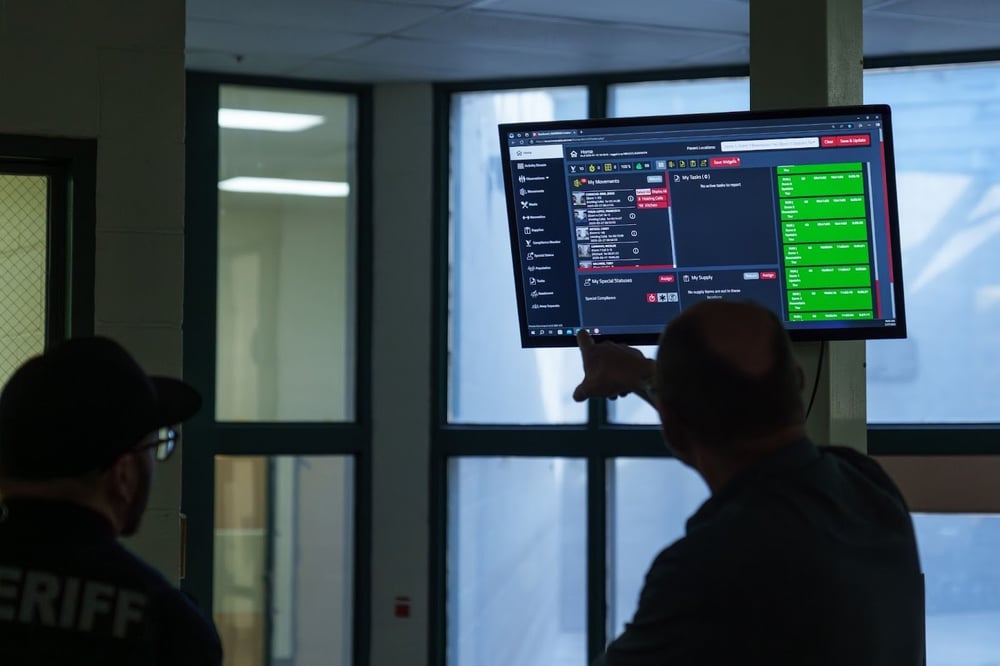
Many facilities that use Command Cloud display Mission Command’s main dashboard in their control rooms, giving control room officers a quick glance at upcoming rounds, which headcounts or meal passes are still pending, and which inmates have returnable or potentially dangerous items. This real-time visibility enhances situational awareness and helps officers focus on specific areas that require monitoring or immediate communication.
If control room officers are placed in a position where they are required to log officer and inmate activity, Mission Command allows for manual entry of each activity. Staff can include detailed, granular information, specifying how each activity was recorded—for example, as a Web Entry. This approach eliminates jotting down incomplete notes, such as “Headcount completed” on a piece of paper, by ensuring the information is accurate, detailed, and actionable.
Control room officers are already stretched too thin to remain fully focused on their primary responsibility: overseeing the safety and security of the facility. By empowering corrections officers to log activities at the point of responsibility using Command Cloud, control room staff are relieved of an added burden and can refocus their attention on being the eyes and ears of the facility. Reducing their workload only isn’t just operationally smart—it’s life-saving.