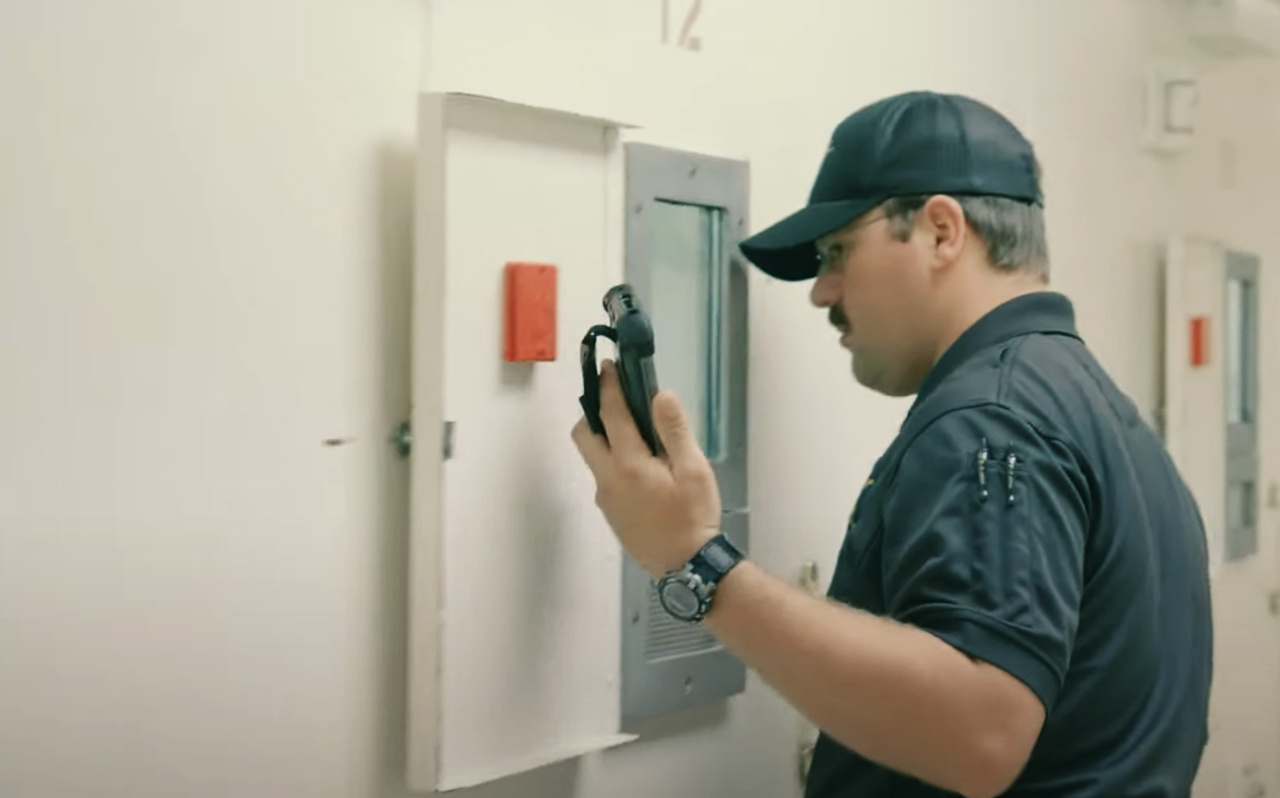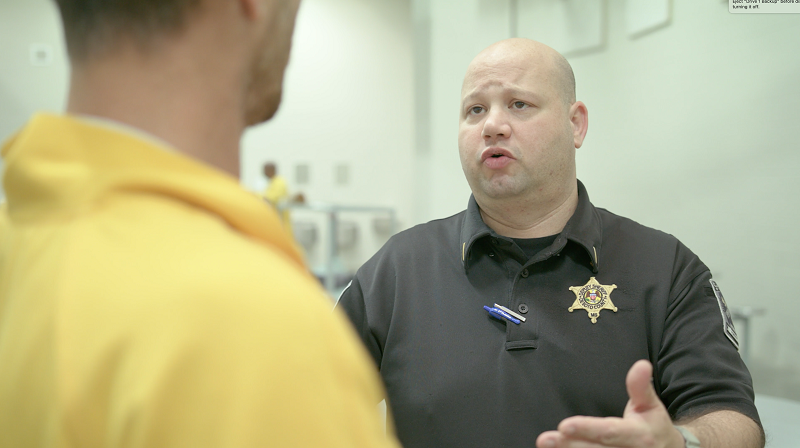
The uniforms change, the scenery shifts, and daily operations look different—but the weight remains. While some believe the transition from serving in the military to working in corrections is seamless, many don’t expect to be entering a different kind of combat.
The term “PTSD” can be instinctively associated with those who actively served in the military. But the reality is that correctional officers are fighting a similar war, but more often in silence. They face relatable trauma and hyper-vigilance, yet they do so without the medals, without the public recognition, and without the reward of returning home.
Correctional officers face a mental health burden far higher than the general population, and the statistics tell a sobering story. While about 7% of the general population struggles with PTSD, that number skyrockets to 34% of those working within the walls. In fact, over 40%of all individuals who have worked in corrections have experienced at least one mental health disorder in their lifetime.
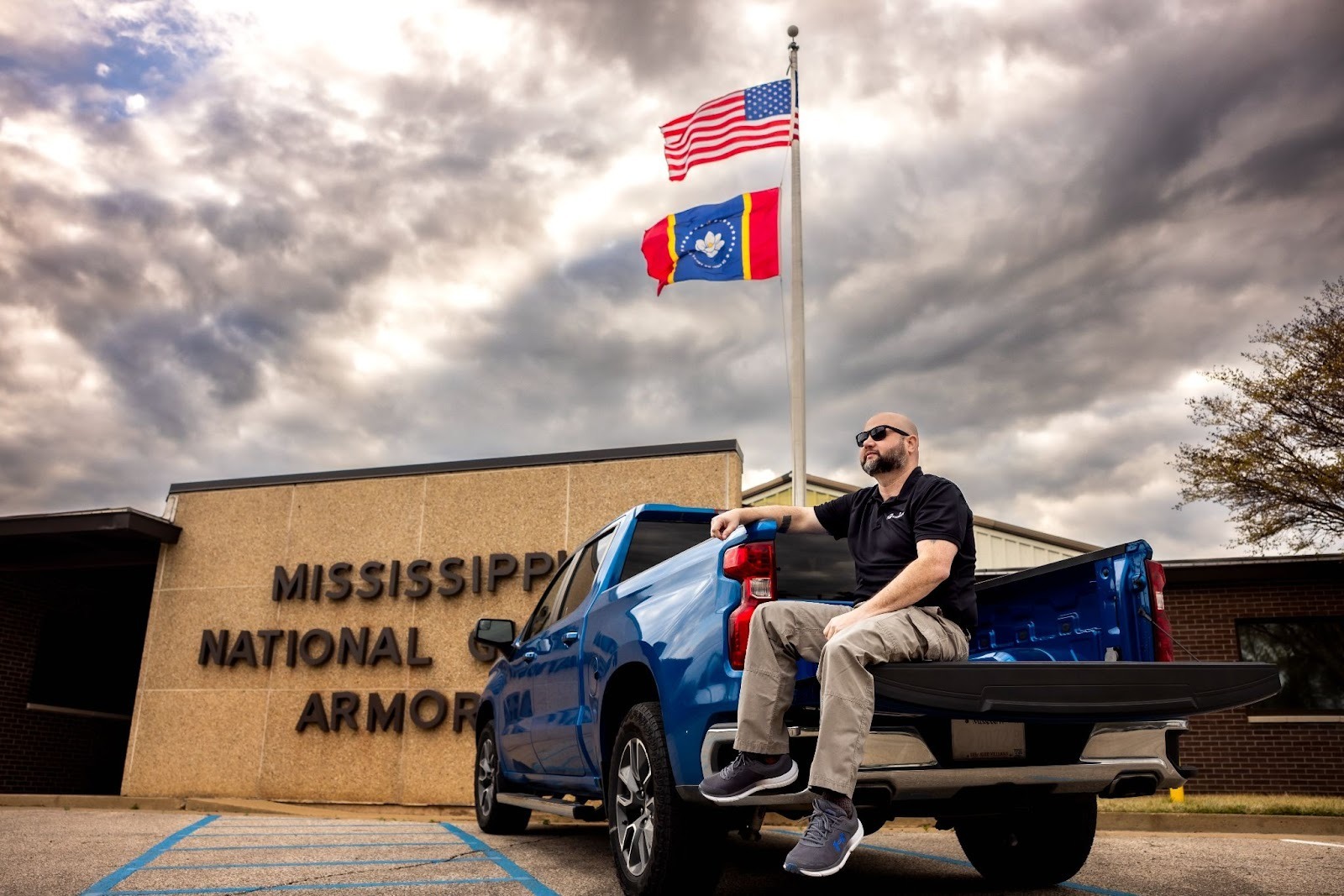
Several Guardians have honorably worked in both the Armed Forces and correctional environments, serving their country and communities twice over. One of them, JailOps Specialist Jeff Jackson, knows the burden of battling PTSD intimately. He is proudly breaking the silence on his battle with PTSD, turning his personal struggle into a lifeline for others still caught in the wake of their own service.
Born in Louisiana and raised by a single mother, Jackson believed in a stark reality: for young men without a father figure, you either turn to crime or you turn to Uncle Sam. Jackson chose the latter. He enrolled in the National Guard Military Academy Youth Challenge Program at Camp Shelby, Mississippi, the largest National Guard site in the country.
There, Jackson started his journey of becoming a soldier. He lived in barracks, had his hair buzzed short, woke up at 5 a.m. every day, made his bed, and went through aggressive basic training that helped shape him into the soldier he became later in life. Jackson says that Camp Shelby is where he was taught the foundation of how to present himself and stick to a schedule, and where he learned that you never succeed as an individual; you only succeed as a team.
While he credits Camp Shelby with his professional discipline, Jackson traces his character back even further to the men who led his Boy Scout troop from the time he was 5 years old until he turned 18. He considered those years the pinnacle of his transformation from a young boy into a man, where the concept of selfless service was first ingrained in his mind.
Jackson celebrated his 18th birthday and graduated from the military academy in December 1998. He briefly explored the path of a college recruit in January 1999, but recognized that within a week of his studies, his calling was elsewhere. He withdrew from his courses and enlisted in the U.S. Army. By March, he was on a plane to Fort Benning, Georgia, for basic training.
Jackson spent the next two years honing his craft and settling into the disciplined rhythm of military life. In those early years, his service was defined by the steady, professional duties of a nation at peace. He felt pride in his commitment, unaware that his resolve was about to be tested by fire.
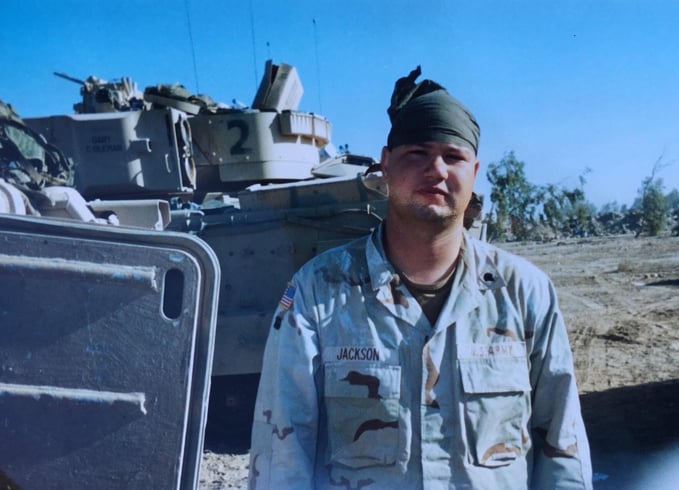
Jackson had completed a deployment to the Middle East just before September 11, 2001, returning home just ten days before the attacks. He vividly remembers the surreal nature of being home for such a short time before the world changed; he was gathered with his unit under armed guard at the motor pool to watch the footage of the second plane hitting the World Trade Center.
It was in this moment that everything changed for Jackson. He recalls that day as the ignition of a fire that soon hardened into something darker. Recalling the horrific real-time footage of people throwing themselves to their deaths over the flames, he felt a fundamental shift in his soul. Witnessing fellow Americans forced into such impossible choices replaced his initial sense of duty with a singular, burning motivator: retribution.
Jackson recalls sitting in total shock watching all the horror unfold on the screen when the silence was broken by his platoon sergeant’s blunt announcement that hung in the air: “We're going to war.”
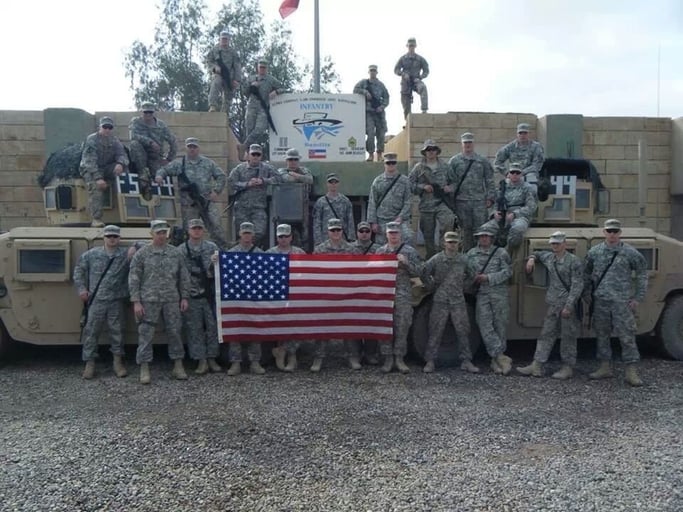
Driven by a singular focus on retribution, Jackson moved through his deployment with a hardened resolve. But one memory from Iraq remains as vivid today as it was in November 2005.
At that time, Jackson’s unit was three months from returning home. Major combat operations had largely subsided; the enemy had been scattered, captured, or killed. His team’s mission had shifted to the grueling, intimate work of house-to-house patrols—checking for lingering threats while ensuring local families had access to water, food, and basic necessities.
But there was one house during these routine checks where Jackson encountered a sight that would haunt him for a lifetime. There was a young girl, no more than six or seven years old, lying on a tiny bed, whimpering.
“I can still remember the smell,” Jackson says. “That haunts me to this day. It’s one of those events where your brain takes a snapshot, and it never lets go.”
The girl had been a casualty of an IED blast in a local market days earlier—the same explosion Jackson had witnessed from a distance, watching bodies thrown through the air. When he flipped on the light to assess her, the "soldier" in him collided with the "human." The entire right side of her body, including her neck, was a mosaic of second- and third-degree burns. Half-charred clothing and blood-soaked bandages had fused to her skin.
“We had grown men crying in that room,” Jackson said. “Most of my team had daughters of their own, you know? It was the first time the human element really broke through the uniform. Seeing that girl shut the ‘soldier’ off in all of us. We were just human again.”
As his team’s EMT, Jackson dove into the trauma. He did what he could—flushing the wounds with saline, applying fresh dressings, and giving the mother what pain meds he had. He knew the situation was dire. Through an interpreter, they pleaded with the family, explaining that without immediate hospital care, she wouldn't survive another 24 hours.
In the midst of the blood and the girl's cries, a single phrase pierced the chaos—one that remains etched in Jackson’s mind. As the interpreter urged the family to move, they simply whispered, “Inshallah.” God willing. In that moment, the weight of the mission, the complexity of the culture, and the fragility of life converged into a memory that Jackson carries to this day.
“When you see innocence hurt, it’s unexplainable,” he said. “When you see bad stuff happen to regular people over in Iraq or even here in the States, you learn how to compartmentalize because you don’t have another option. You have to believe that bad stuff happens to good people every day. We said that to ourselves every day, just so we could wake up and go on another mission. It's how you dealt with your buddies getting killed. It's how you dealt with the collateral damage. It's how you dealt with a terrorist blowing up a marketplace and killing the largest number of innocent people.”
Over the years in combat, as Jackson climbed up the ranks, his battle with PTSD rose quietly alongside him. He vividly remembers the Base Command Sergeant Major calling him over, scanning the patches on his chest and shoulders before locking eyes with him. “Bring ‘em home,” the Sergeant Major said. Jackson’s instinctive response—“Roger that”—became an epiphany. In that moment, he realized his mission had shifted; it was no longer about his own survival, but the lives of his team.
While he bore the weight of the world for his men, Jackson didn't realize he was already in the trenches of a private war. He recalls how, in the rare moments of solitude, his mind and body would simply shut down. When the noise of combat stopped, the silence became deafening. Without his team around him to act as armor, the mental breakdowns would take hold.
To survive, Jackson learned to compartmentalize rather than cope. He found he had an internal "pause button" he could hit to numb the trauma just long enough to face the next mission.
“It felt like I had a weight around my ankles that just got heavier every day,” Jackson said. “I spent so long walking in what felt like an unending darkness of the world, just trying to find a way out, looking for a light. When I was contemplating giving in, I cried out to St. Michael the Archangel, Patron Saint of Soldiers. Almost immediately, I felt a presence enter me, and I realized the light was within me all along. I just need to open my eyes.”
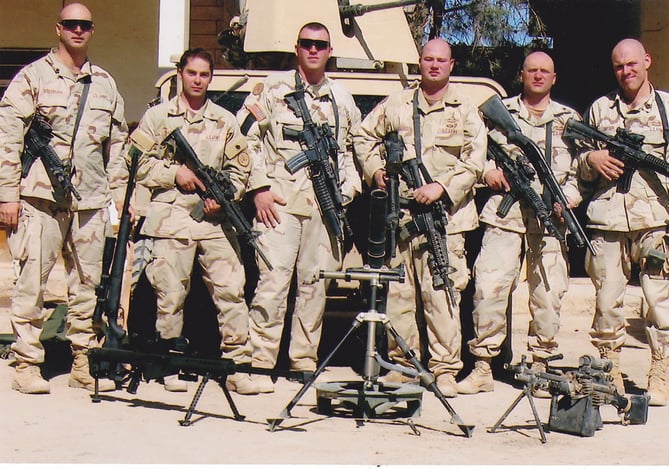
After 12 years as an Army Infantryman and three deployments as part of Operation Iraqi Freedom, Jackson finally came home. He hung up his combat boots, thinking the war was over—physically and mentally. What he didn’t realize was the baggage he had packed with him—a silent stowaway illness born from years of trauma overseas.
Upon his return home, Jackson sought a new mission: a career in corrections. He started working as a correctional officer at the DeSoto County Sheriff’s Office, Mississippi, in July of 2011. Given his background in the Army, he expected a straightforward transition into a jail setting where he already understood the foundations of policy, procedure, and protection. Jackson thought he had left the battlefield behind for good, but he was actually entering a new era of combat—one fought in a different light.
Those who work in corrections operate in a high-threat, high-stress environment at all times. The "armor" they put on at the start of a shift is also, indirectly, a mask that hides their humanity. What they see during their work hours often takes a toll during their off-shift hours.
“Once I made my move into the correctional field, I battled a different beast,” said Jackson. “Like any good soldier, I kept it bottled down because the mission came first. My personal feelings came last.”
Jackson was initially naive about the dangers of working in a jail, but soon realized the severity of his environment while managing inmates. He recounts traumatic exposures—events that "stacked" upon his time in the Army to create a permanent psychological burden.
There is one shift in particular that Jackson remembers with haunting clarity. His team was monitoring an inmate in detox when the situation turned volatile; the inmate managed to shove past a nurse and a female officer, who immediately radioed Jackson for backup. The moment Jackson heard the raw panic and fear in their voices, something inside him snapped, and his vision went red.
He "came to" when he heard the female officer’s voice piercing through his rage: “LIEUTENANT! LIEUTENANT!” Suddenly, the fog cleared. Jackson found himself pinned against the inmate, who was trapped between him and the wall. Shaking but functional, he managed to compose himself long enough to handcuff the man and escort him back to an isolation cell without further incident. But as the adrenaline began to recede, the weight of what had just happened settled in.
“I knew then that what happened wasn't normal,” Jackson recalls. His heart was hammering against his ribs, and his vision remained blurred. He realized in that moment of heavy silence that he couldn't finish his shift; he needed to go home.
The realization was chilling: in that "blackout" state of rage, he could have critically injured the inmate, his fellow officers, or himself. If it hadn't been for his teammate's voice pulling him back to reality, the consequences could have been life-altering. For Jackson, it was a terrifying wake-up call that the war he thought he had left behind was still very much alive inside him.
“The problem is I carried that into the civilian sector, and every problem that I ever came across, I would just bottle it down, and I never dealt with it until I got married and I had a kid, and I started bringing that home with me,” Jackson said.
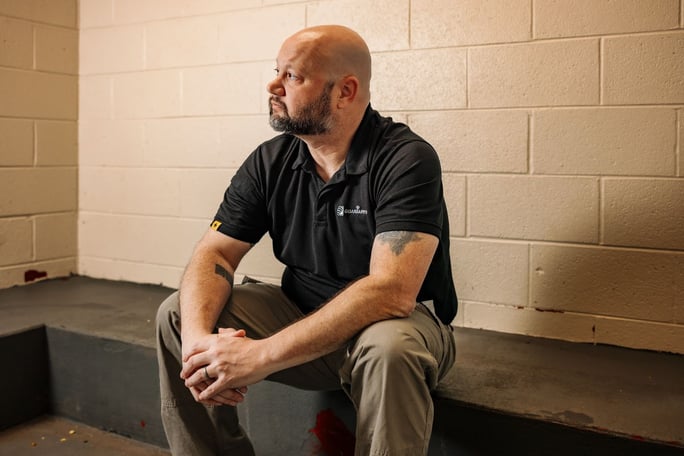
While a healthy officer can go home and see family as a safe haven, one struggling with mental illness often sees other household members as potential threats. While one would assume that the disciplined structure of correctional work provides a helpful transition for veterans, in more cases than not, it inadvertently traps them in a cycle of constant danger assessment.
A significant factor in why veterans struggle in corrections is the nature of their initial military training. Soldiers are taught "tactical vigilance"—a constant scanning for shadows, listening for footsteps, and watching for anything that feels out of the ordinary.
While this state of readiness is essential for survival in a combat zone, it turns into hypervigilance in civilian life. Hypervigilance is characterized by a constant state of being "always on," easily startled, and unable to relax, even when off duty. For a veteran already wired this way, a jail or prison isn't just a workplace—it’s a constant trigger.
This is why just telling officers they "just need to learn how to talk" isn't enough. Correctional officers like to say they have each other’s backs, Jackson says, but if a coworker doesn't feel comfortable saying "I’m struggling," then they aren't truly protecting one another.
“When you’re a soldier overseas, you’re doing a job, and that’s one form of PTSD,” Jackson said. “But inside the walls of a jail or prison, it’s different. You’re lied to every day, you’re spit on, you’re often underpaid and under-geared, and you’re facing a society that can seem unappreciative. All of that develops into deep trust issues. Talking through your trauma is helpful, but only with the right people. Sometimes family isn’t the best support because you need like-minded people who actually relate to your world; more often than not, your family just can’t empathize with the things you’ve witnessed. Eventually, it catches up to you. For me personally, my marriage was in shambles. I didn’t like coming home, and I wasn’t playing with my daughter. Everything I had bottled up finally came to the surface, and I had to ask for help.”
How did Jackson overcome his struggle with PTSD? Well, the truth is, he didn’t. He just learned to live with it. He understood that PTSD doesn’t just go away, and it can’t be undone.
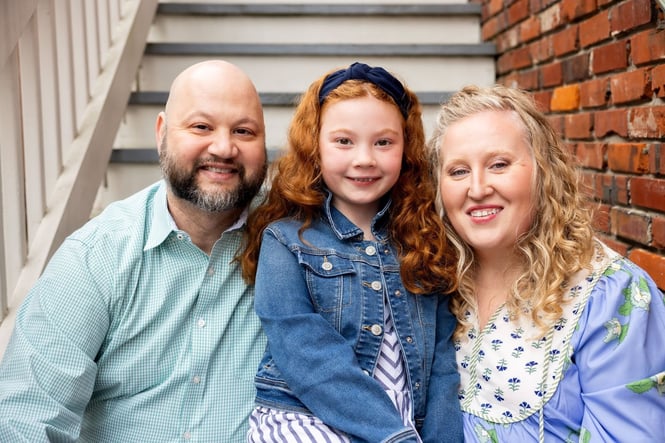
For Jackson, that included a literal come-to-Jesus moment where he recognized how God, his wife, and daughter were his bigger purpose, giving him a reason to force himself to heal. He had to pour all his effort into being a good Christian, husband, and daddy, he said. That gave him a new sense of direction—and marked the beginning of his recovery.
“I had to learn how to quit feeling sorry for myself and learn how to live with it. I had to start caring about something bigger than myself. And most importantly, I had to forgive myself. I’ve saved life. I’ve taken life. I’ve created life. You need all three of those to really understand humanity.”
Lieutenant Tim Millican of the Southaven PD—a SWAT officer and former teammate of Jackson’s in Iraq—remains a close friend to this day. "Jackson established a standard of firm yet fair, nurturing leadership that I’ve carried throughout my military and law enforcement careers," Millican says. "Twenty years later, I still emulate his approach to leadership and resiliency." That professional respect is matched by a deep personal loyalty: today, the two men are the Godfathers of each other's firstborns.
Jackson crossed paths with GUARDIAN RFID when its video team came to DeSoto County to film a “Warrior Success Story” about the jail, and Jackson was in the right place at the right time. Over a meal at a Mexican restaurant not far from the jail, he connected with a GUARDIAN RFID employee about taking the opportunity to work in the civilian sector. Six years later, Jackson is helping Warriors across the country protect the Thin Gray Line by working as a JailOps Specialist.
“What I really like about JailOps is that my team has a very similar background to all administrator roles,” Jackson said. “Everyone will work together to find a solution. We are a tight team, and we work together collectively. We’re a jack of all trades when we’re helping clients. We have a cross-over working with all teams. Our goal is to help our customers, and I think we do a good job at it.”
When Jackson isn't helping clients, he embraces the "nerd" side of life—PC gaming, smoking meat on his Traeger, and collecting bourbon. He remains a strong and vocal advocate for mental health, living by a simple, powerful mantra: “Just because you’re bruised doesn’t mean you’re broken.”
Jackson’s journey from the battlefields of Iraq to the cell blocks of De Soto County Jail—and now to his role at GUARDIAN RFID as a JailOps Specialist—serves as a reminder that the "armor" we carry isn't meant to be a permanent shell. True strength isn't found in the ability to bottle up trauma until it overflows; it’s found in the courage to unstrap the gear, face the silence, and forgive yourself.
By shifting his focus to a purpose larger than his pain—his faith, his family, and his mission to protect the Thin Gray Line—Jackson transformed his bruises into a roadmap for others. He proved that while the scars of service are permanent, they don’t have to be paralyzing. For Jackson, the transition wasn't just about a new job; it was about bringing the values of the elite to a field that often feels forgotten.
“In my military days, I learned that the most outstanding units are the ones that take care of their own,” Jackson said. “We don't leave people behind on the battlefield, and we shouldn't leave them behind in the staff lounge.”
Serving in corrections is often a thankless, misunderstood, and grueling mission. Those who stand watch face a society that rarely sees their sacrifice and an environment that constantly tests their righteousness. Yet, Jackson says, there is a profound blessing found in that perseverance. For Jackson, every officer’s commitment to doing what is right—even when it costs them—has a divine promise attached to it. It’s summed up in his favorite Bible verse:
"Blessed are those who are persecuted for righteousness' sake, for theirs is the kingdom of heaven."
(Matthew 5:10)
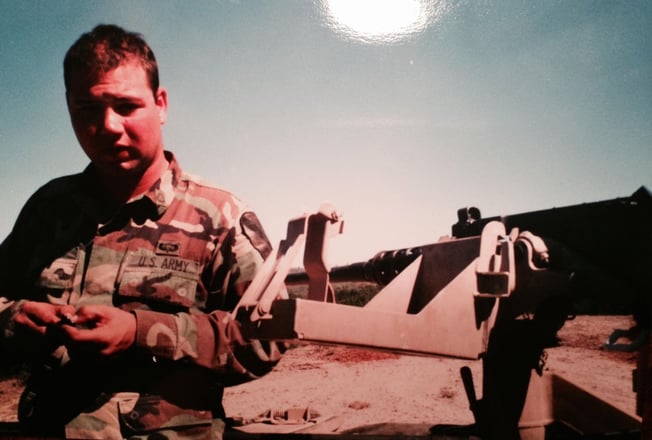
Jackson is no longer just "bringing 'em home"—he is helping those who are already home find their way back to themselves.
If you or someone you know is navigating the challenges of PTSD, Jeff Jackson is available to connect with anyone seeking support or conversation. You can contact him at jeff.jackson@guardianrfid.com to start a dialogue.