A guard tour vendor isn't just another purchase. It's more like a multi-year marriage. And once the hardware is on the walls, officers are trained, and policies are written, walking away is a multi-month operational lift that your entire team will feel in every shift.
That is why the vendor matters as much as the product.
Hardware can be repaired. Software can be patched. But a vendor going quiet after the sale or stops investing in the platform altogether can’t be fixed. And by the time you notice, you're already locked in.
This blog covers five critical questions that administrators often wish they had asked before signing a contract with a guard tour vendor.
1. How durable is the hardware, really?
Every vendor will claim their device is "built for corrections." It’s important to pressure-test that claim before you sign.
Ask the vendor to demonstrate the device under stress. Drop it from the second tier. Pour a bucket of water on it. Scrape it along the concrete walls of a pod.
Lt. Lonnie Kettler from the Smith County Jail, Texas, brought up product durability to the vendors at the 2022 Sheriffs’ Association of Texas Annual Training Conference and Expo. She would ask the vendor's representative to drop their device on the expo floor. Many of whom hesitated.
It wasn’t until one vendor, whose product was a SPARTAN, a ruggedized Android device, complied and purposefully dropped the device on the ground. “When it didn't break,” Kettler said, ”It made a believer out of me.”
If the vendor will not demonstrate the reality of what happens in corrections, such as adequately dropping a device in front of you, you already have the answer to your first question.
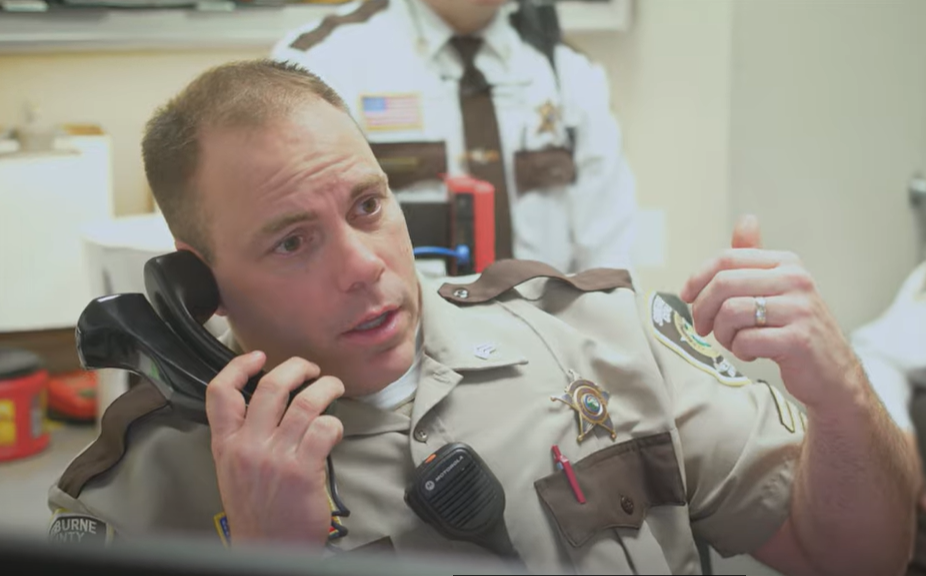
2. What does customer support actually look like after the sale?
Sales teams are responsive, of course. But Support teams are the real test. Be sure to ask vendors:
- Are there tiered support services?
- How can I receive support? Is it only email tickets, or am I able to call and speak with a real person?
- What are typical support hours? And what happens if I need help during the evenings or over the weekend?
- What are the average response times for issues?
- Is on-site training included, or only a remote walk-through?
A useful test would be to ask the vendor for the name and direct line of the customer success person who will be assigned to your facility. If they cannot answer, that role probably does not exist. And that’s likely only scratching the surface of the type of experience your staff will live with for the duration of the contract.
3. Can the system generate the reports we actually need?
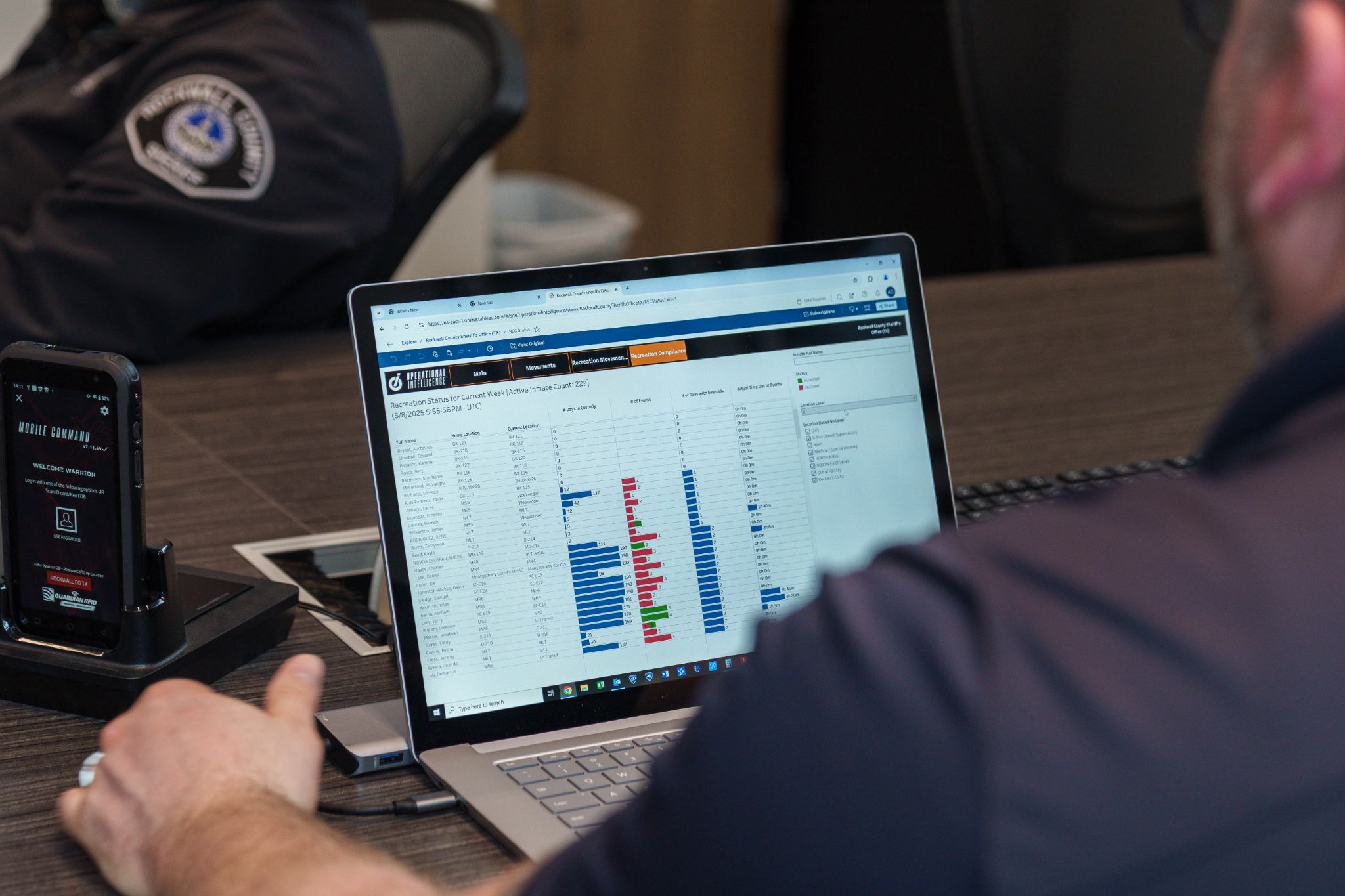
Every guard tour system claims to "generate reports." But the question is which reports — and whether they are up to state standards.
There are levels to this question that are important to clarify. Walk into the conversation with a list of the exact reports your agency demands — and ensure the vendor can prove their system produces each one, including:
- Round compliance percentages by shift, by officer, by housing unit
- Late check justifications with supervisor sign-off
- Recreation time per inmate per week
- Meal acceptance and refusal logs
- Medication acceptance and refusal logs
- Supply pass records, including dangerous items
- Restraint usage documentation with timestamps and digital evidence
- Custom reports that your inspector specifically requests
Assistant Chief Deputy Jason Long at the Gaston County Jail, North Carolina, described the moment his agency realized their vendor had a gap in reporting capabilities:
“The primary drive from switching vendors was the feedback from staff indicating that they'd had multiple issues with other vendors. Namely, among those was the ability to create customizable reports and to generate the data that we need to truly be able to evaluate the efficiency and effectiveness of our staff.”
If the vendor can’t show you a live demo of your required reports — not a generic example — assume there is a lack of reporting capabilities.
4. Does it integrate with your jail management system?
A guard tour system that does not communicate with your jail management system (JMS) is a problem. Why? Because that leaves officers having to enter the same information in multiple places, which increases administrative workload, reduces visibility across systems, and creates more opportunities for errors.
To avoid this time-consuming hassle, it’s important to ask guard tour vendors:
- What JMS platforms do you currently integrate with?
- Is the integration one-way or two-way?
- What inmate data flows between the systems automatically?
- What happens during a JMS outage?
If the vendor's integration list does not include your JMS — or if "integration" turns out to mean "we export a CSV you can upload manually" — that is not integration. That is a workaround.
5. Is the platform continuously being improved?
This is the question jail administrators most often fail to ask vendors — and later wish they had.
Some guard tour platforms have not had a meaningful software update in five or more years. The vendor keeps selling hardware and renewals, but engineering investment has effectively stopped.
Captain Alexander Gray at the Rockwall County Jail, Texas, described his previous guard tour system this way:
“We recognized that the [legacy] system had become antiquated, and there was not a lot of effort being put into improving or adding useful features.”
Consider asking questions that surface this:
- What new features have shipped in the last 12 months?
- What is on the roadmap for the next 12 months?
- Is the hardware platform current?
A vendor that can’t answer those questions in specifics is in maintenance mode. And maintenance mode is not where your agency wants to be in five years.
What the answers tell you, side-by-side:
|
Question |
A good answer sounds like |
A bad answer sounds like |
|---|---|---|
|
Hardware ruggedness |
"Let me drop it for you." |
"It's rated for jail use." |
|
Customer support |
"Your account manager is Mark. Here is his direct line." |
"Open a ticket on the portal." |
|
Reporting |
A live demo of the reports you need |
"We can probably build that." |
|
JMS integration |
Named platforms, named data fields |
"We export to CSV." |
|
Product roadmap |
Specific features shipped and specific features coming |
"We're stable." |
Chief Deputy Scott Wyatt at the Gaston County Jail, North Carolina, captured what a good vendor evaluation eventually feels like:
“When we were looking at all our processes within the jail, we recognized that the system we were using wasn't meeting the needs of our officers. We started looking at other platforms and immediately knew [our new platform] was the Cadillac system we wanted.”
That clarity does not come from sales decks. It comes from asking the five questions above and listening for the difference between marketing language and real answers.
FAQ
How long should a guard tour vendor evaluation take?
For most agencies, 60 to 90 days is reasonable. That includes a demo, a reference check with two or three current customers, a hardware stress test, and a review of the vendor's reporting against state jail standards. For a deeper buyer's framework, see 10 perfect questions to ask at a demo.
Should we ask for a pilot before signing?
Yes. Any serious vendor should be willing to deploy a pilot — even a paid one — at one housing unit before a full facility commitment. A vendor that refuses to pilot is asking you to commit blindly.
What contract length is reasonable?
That depends on the agency. Multi-year contracts often include pricing protection and prioritized support. Year-to-year contracts give the agency flexibility if the vendor falls behind on roadmap delivery. Ask about both before signing either.
How do we check vendor references the right way?
Don't accept vendor-selected references. Ask the vendor for the full customer list in your state, then randomly pick three to call directly. Reference checks the vendor curates are almost always positive. Random checks are not. The Texas Commission on Jail Standards and similar bodies in other states are also useful third-party sources for facility-level compliance data.
What should the support conversation look like at evaluation?
Ask the vendor to walk you through a real support escalation: who picks up the phone, how fast, what they fix on the call, and when they hand off to engineering. For one administrator's view of what good support looks like in practice, see what kind of technical support GUARDIAN RFID provides.
The final word
A guard tour vendor decision is rarely the most expensive line item in a jail's budget. It is often the longest-lived. Five honest answers before signing can save five years of operational pain afterward.
Want a deeper look at what to look for in a modern inmate tracking platform?
Download the Ultimate Guide to Mobile Inmate Tracking below for the questions, frameworks, and feature checklists agencies use to evaluate vendors with confidence.