When implementing a new product or service in your facility, you know the level of due diligence required to feel confident in your purchasing decision. You conduct all the research, attend the demos, ask all the necessary questions, and confirm that your team is in agreement with the investment.
For some agencies, particularly those already experiencing pre-existing operational challenges, there are opportunities to leverage their facility as pilot programs. These are trial deployments that allow agencies to test a new product, system, or process in a real-world environment before committing to full implementation.
In a correctional setting, a pilot typically involves deploying a new technology, policy, or workflow provided by a vendor for a defined period. The goal is to gather performance data, staff feedback, and operational insights to identify issues, training needs, and opportunities for improvement for both the agency and the product.
When exploring solutions to modernize operations, such as RFID technology, agencies can assess current challenges and identify where a pilot may help bridge critical gaps. Vendors like GUARDIAN RFID offer pilot programs that not only support agencies in improving their day-to-day operations but also benefit from real-world staff feedback to refine and scale their solutions.
This blog explores how agencies and vendors can maximize the value of pilot programs, the return on investing time and resources, and how GUARDIAN RFID pilots support targeted operational improvements.
What Do Agencies Gain by Participating in a Pilot Program?
Serving as a pilot is a lot like being friends-with-benefits: you get to test the waters and explore what you like (and don’t like) without the long-term commitment.
Participating as a pilot agency allows facilities to evaluate whether the technology is truly the right fit for their operations. For agencies that may be on the fence about whether RFID aligns with their needs, a pilot provides a low-risk opportunity to determine whether the solution addresses real operational pain points—and where it delivers the most value.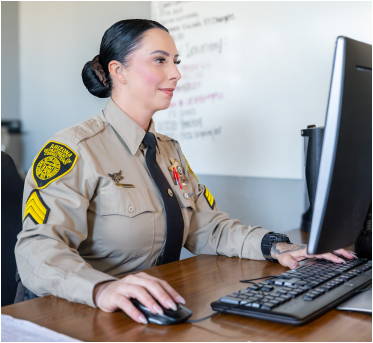
Pilot programs allow agencies to test the product in day-to-day operations without committing to a full deployment. This hands-on evaluation helps facilities measure tangible outcomes, all without the pressure of immediate budget approval, including:
- Time savings
- Improved accountability
- Enhanced documentation accuracy
- Greater visibility into daily activity
Pilots are especially beneficial for agencies facing challenges such as chronic understaffing, time-intensive manual processes, limited insight into operational bottlenecks, or gaps in documentation and reporting. By exposing these challenges in real time, the pilot helps agencies clearly identify where improvements are needed and how technology can support more efficient workflows.
Once areas for improvement are identified, agencies can tailor operational adjustments to meet their specific needs. The result is a clearer path to improved outcomes, stronger workflows, and a defensible return on investment. Just as importantly, the data and evidence gathered during the pilot can be shared with leadership to support informed budgeting decisions and justify a full-scale rollout.
What Should Be Considered Before Serving as a Pilot Agency?
Before committing to a pilot program, you and your team should align on key questions relating to team structure, ownership, and daily operations.
In the best-case scenario, all stakeholders—from line staff to supervisors and administrators—are included when addressing key decision-driving questions. The conversations would include evaluating facility and team readiness for the pilot and identifying where the pilot can have the greatest operational impact.
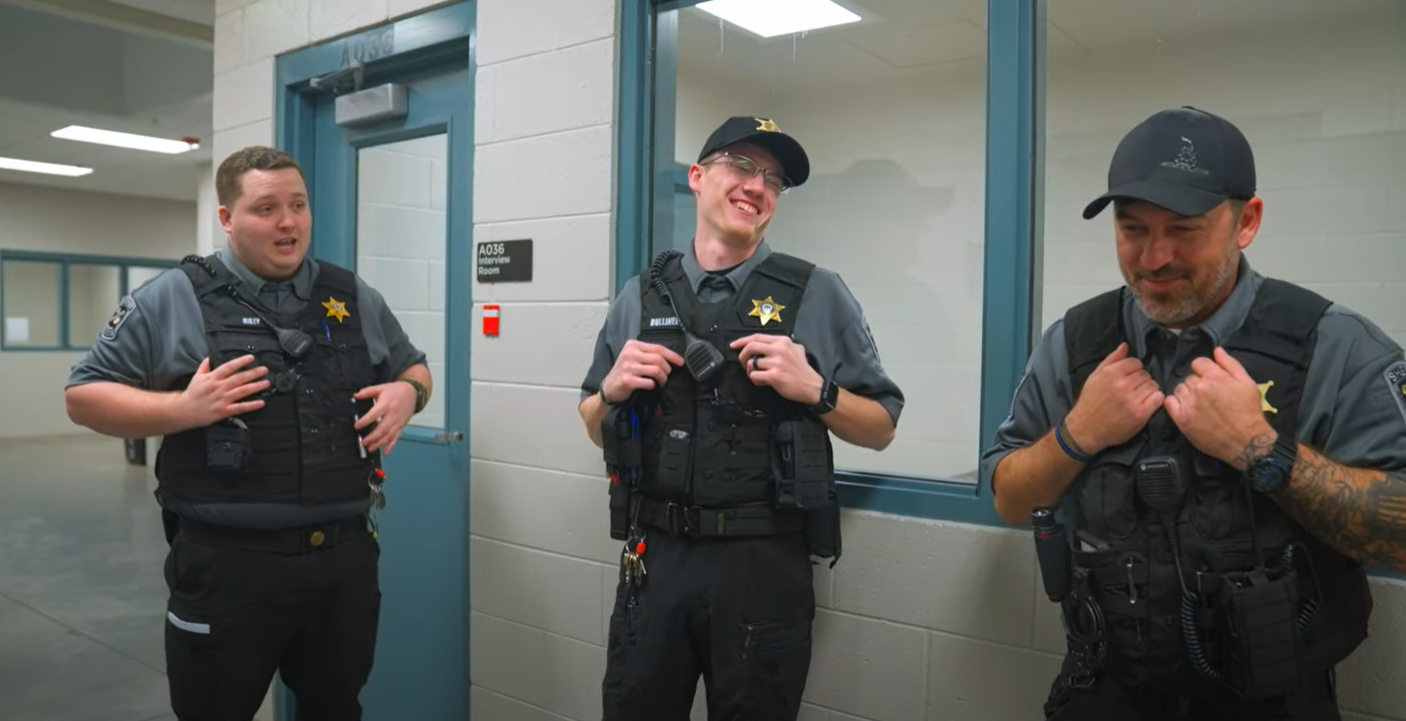
When evaluating if your facility and team are ready to serve as a pilot, consider the following:
- What problem(s) are we trying to solve? Do we all collectively agree that a solution is needed?
- Do we have leadership support to remove roadblocks?
- Do we have full participation from the line staff? How will accountability be enforced?
- Do we have a designated point of contact? Who is the person(s) responsible for the communication with both the internal team and the vendor?
- Will dedicated time be provided for training? Can we commit to gathering feedback and conducting regular check-ins?
- Do we agree on the pilot’s timeframe? Are we committing to a defined period, or do we want the flexibility to exit early?
When identifying where the pilot can have the greatest operational impact, consider the following:
- Which areas of the facility are best suited for the pilot to take place? Will it be limited to a specific pod or cell block, or are we allowing the pilot to run facility-wide?
- Are workflows stable enough to measure change? Do we have areas of the facility that have repeatable, measurable activity for the pilot to have a higher likelihood of success?
- Does the facility have the necessary infrastructure to support the vendor’s hardware installation?
- What network or power requirements from the vendor are needed, and are we prepared to accommodate them?
What Does the Vendor Conducting the Pilot Benefit From?
The primary goal of a pilot is to gather candid, real-world feedback. The vendor conducting the pilot benefits from direct access to this data and unfiltered user feedback that simply can’t be replicated in a demo or sales environment. Pilot programs provide measurable insights into how the solution performs in live operations, including adoption rates, workflow efficiency, time savings, error reduction, and overall usability across different areas, roles, and shifts.
By analyzing this data alongside honest feedback from frontline users and leadership, vendors can clearly identify which workflows are being optimized, where friction still exists, and how the product impacts day-to-day operations—both positively and negatively. This level of visibility allows vendors to validate assumptions, quantify improvements, and uncover gaps that may not have been evident during initial implementation.
Pilot site results also help vendors refine training and onboarding strategies. By analyzing usage patterns and performance metrics, vendors can identify where users struggle and which features require additional guidance—allowing them to focus training efforts where they matter most and accelerate user adoption.
When GUARDIAN RFID conducts a pilot, it captures these evidence-based insights to continuously strengthen its platform, inform future product development, and ensure the solution delivers measurable value for agencies before, during, and after full deployment.
“A pilot allows us to deploy in a smaller test environment, establish all system connections and data interfaces, and validate that the concept macthes the customer’s unique needs. Thist small, nimble, and fast approach is the largest benefit of a pilot program. Learning how to build, scale, and train teams at a manageable size can be incredibly valuable—especially for large, complex facilities.”
- Daniel Quam | Director of Product
What Do GUARDIAN RFID Pilot Programs Entail?
GUARDIAN RFID pilot programs are designed to thoughtfully introduce new product enhancements in real operational environments. They focus on upgraded versions of existing solutions rather than entirely new, from-the-ground-up products. Because of this, many participating agencies are already familiar with the core functionality, making it easier to evaluate improvements without the disruption of a completely new system.
This allows facilities to fully test the product in live conditions, assess usability, and measure operational impact without financial risk. If an agency chooses to continue using the product after the pilot concludes, it is typically offered a discounted rate for a defined period. Once the product is fully released and that discounted period ends, standard pricing applies—just like any other GUARDIAN RFID customer.
The ultimate goal of every GUARDIAN RFID pilot is mutual long-term value. GUARDIAN aims for pilot sites to see enough measurable benefit—whether through improved efficiency, accuracy, safety, or accountability—that they choose to become full-time users. At the same time, there is never any obligation to move forward. Agencies are given the time and flexibility to evaluate return on investment and operational outcomes before making a long-term commitment, ensuring any decision is driven by cold hard data and real-world results.
“Product pilots can be mutually beneficial. Customers gain early access to new products and features, while providing direct feedback that helps shape the product from the very beginning. GUARDIAN RFID benefits from strong partnerships with customers who are invested in the product’s success, and from gaining insights into how the product is actually used in real-world operations.”
- Ben Simpson | Technical Product Manager
Who Would Benefit Most From a GUARDIAN RFID Pilot Program?
GUARDIAN RFID pilot programs are not designed for every facility. Given the scope and operational depth of the solutions, pilot programs are best suited for larger facilities with an inmate population of 1,500 or less. These environments provide the scale and complexity needed to fully test the technology across multiple workflows, shifts, and operational scenarios.
However, it’s important to note that GUARDIAN RFID solutions are not limited to large facilities alone. Small and mid-sized jails can absolutely benefit from the technology. However, the pilot process itself is most effective in larger populations, where a broader range of variables—such as movement volume, staffing constraints, and documentation demands—can be evaluated in real-world conditions.
For small or mid-sized agencies interested in a deeper understanding of GUARDIAN RFID products, GUARDIAN offers alternative ways to explore the platform without participating in a formal pilot. These options allow agencies to evaluate functionality, understand operational fit, and assess potential impact in a way that aligns with their size and resources.
“It's only beneficial for large Department of Corrections (DOC)'s to test policy and procedure. Pilots aren’t for everyone, such as a smaller facility. Instead of a pilot, send staff to a neighboring facility that has it in place and have them shadow staff and see it in use in real time. GUARDIAN RFID could set up a demo environment at the facility, and staff would document in the moment.”
- Paul Baze | Regional Sales Leader
Who Has Had Success with a GUARDIAN RFID Pilot?
One of GUARDIAN RFID’s most impactful pilot programs was conducted in partnership with the Arizona Department of Corrections, Rehabilitation, and Reentry (ADCRR).
ADCRR oversees approximately 40,000 individuals across nine complexes. In January 2023, the agency initiated a pilot deployment of Command Cloud at the Eyman Complex Browning Unit.
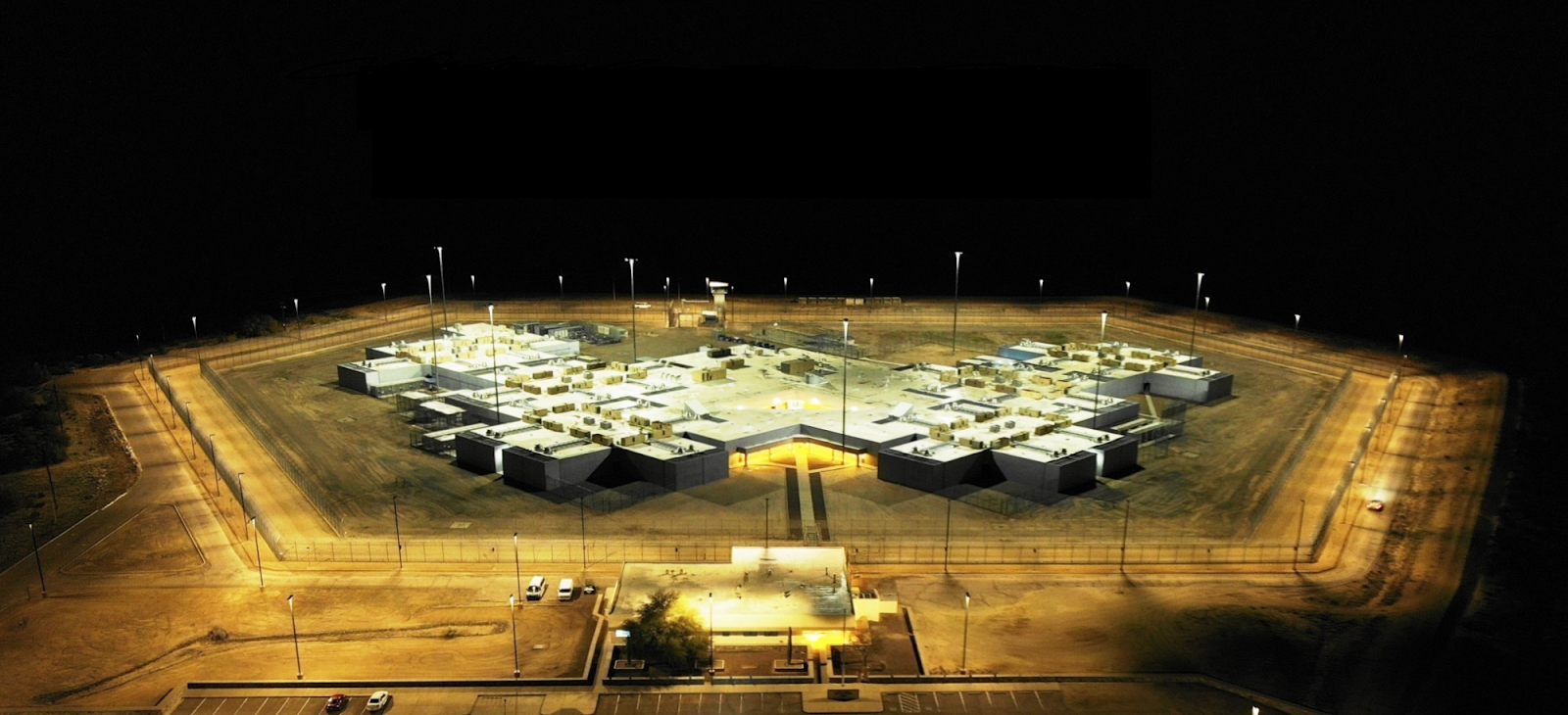
The pilot was launched during a period of heightened scrutiny and mandated reforms for ADCRR. In Jensen v. Thornell, a federal class-action lawsuit, incarcerated individuals alleged violations of their Eighth Amendment rights due to inadequate medical and mental health care. In 2022, the court’s findings confirmed constitutional violations and systemic deficiencies in healthcare delivery. The following year, ADCRR was required to implement a series of reforms to address these issues and improve compliance.
In response, ADCRR sought to modernize operations and strengthen inmate monitoring by evaluating technology solutions that could enhance accountability, documentation, and compliance. This effort led the agency to partner with GUARDIAN RFID and launch a pilot of Command Cloud, its officer experience platform, to support operational improvements tied to inmate healthcare and oversight.
Prior to the pilot program, the Browning Unit heavily relied on manual, paper-based systems, processing over 1,000 forms each week for a population exceeding 1,000 inmates. The pilot included installing over 1,200 wall-mounted RFID Hard Tags and 44 SPARTANs, licensing to Operational Intelligence, and cloud-native reporting integrated with ADCRR’s homegrown offender management system.

Within the first 90 days, the Browning Unit improved compliance with inmate out-of-cell time to more than 75%. For the first time in the facility’s history, staff at every level had real-time visibility into out-of-cell compliance rates. Within six months, compliance exceeded 95%.
The same level of accountability is extended to other court-monitored requirements. Access to inmate supplies—including cleaning supplies—was tracked and reported as required, with compliance surpassing 95% in less than a year. Comparable improvements were also achieved across recreation, meals, showering, and programming, each reaching measurable compliance levels above 95%.
Following the pilot’s success, ADCRR approved a statewide expansion of Command Cloud across all remaining complexes to support compliance with the Injunction. The full rollout was completed in November 2024.
Pilot programs play a critical role in helping correctional agencies move from uncertainty to informed decision-making. Rather than relying solely on demos, assumptions, or vendor promises, pilots allow facilities to validate technology in live operations—where staffing shortages, documentation demands, and compliance pressures are felt most acutely.
A well-structured pilot benefits everyone involved. Agencies gain measurable insight into operational efficiencies, accountability improvements, and return on investment—without committing to a full deployment upfront. Vendors gain the real-world data and staff feedback necessary to refine products, strengthen training, and ensure solutions scale effectively across diverse facility environments.
GUARDIAN RFID pilot programs are intentionally designed to support this balanced approach. By focusing on realistic workflows, defined timelines, and data-driven outcomes, they enable agencies to confidently evaluate whether RFID technology aligns with their operational needs. As demonstrated by successful deployments like the ADCRR, the right pilot can lay the foundation for long-term modernization, compliance, and measurable improvement.