Updated: 09/01/2026
A modern jail facility is designed around movement, separation, and visibility — backed by cloud-based operational technology rather than paper and clipboards. It keeps arrestee paths from crossing, incorporates multiple layers of physical screening, and provides officers with real-time visibility into every area. The result is fewer incidents, faster processing, and documentation that holds up under scrutiny.
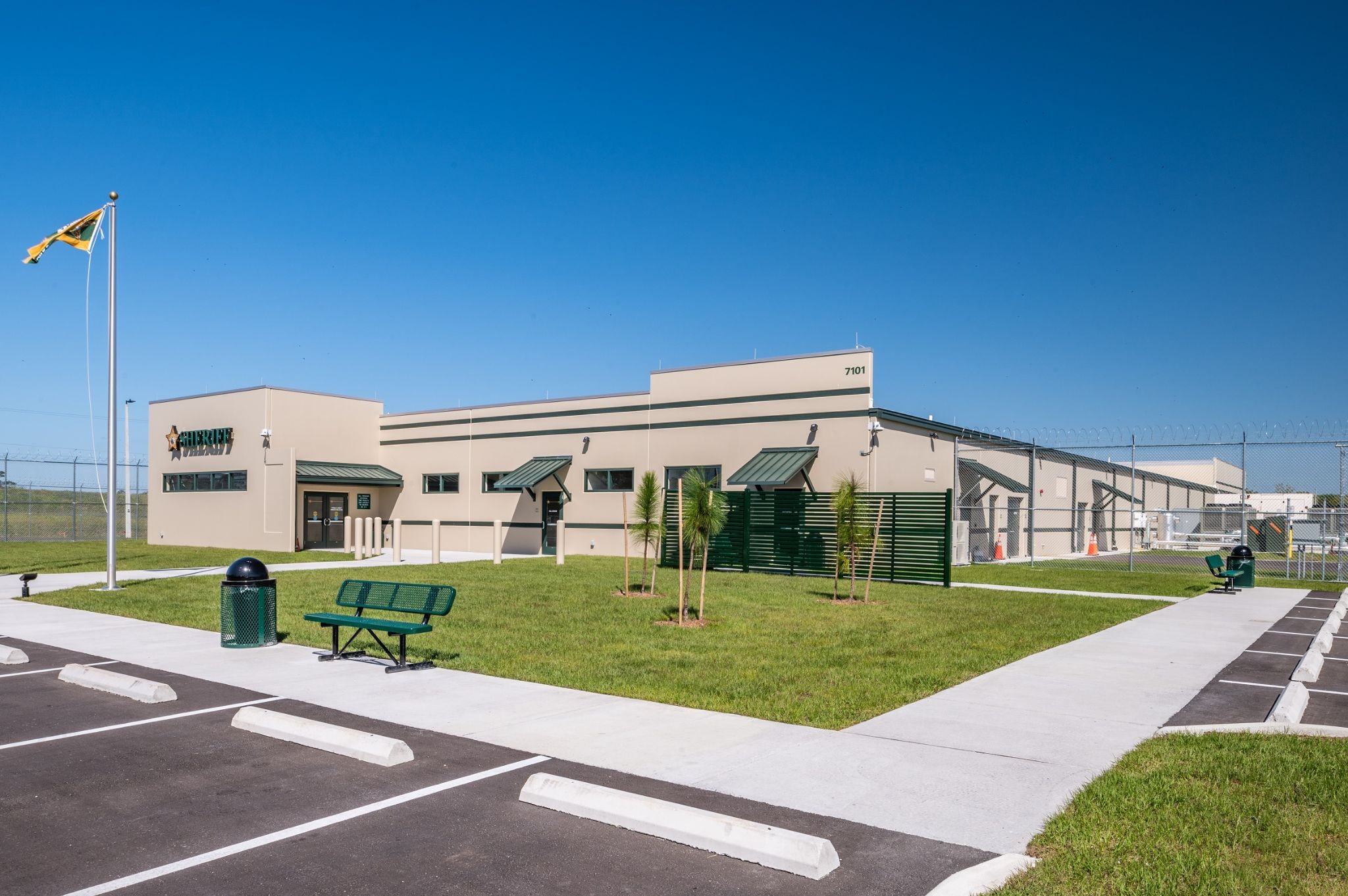
The Polk County Sheriff's Office in Bartow, Florida, opened its new processing center in May 2021. The facility serves nearly 40 surrounding cities and processes roughly 30,000 bookings a year. The tour was led by Captain Tom Laurell, then a captain at Polk County Sheriff's Office, and now a JailOps Specialist at GUARDIAN RFID. With his firsthand experience, several design features stood out as significant improvements over the agency’s previous facility.
Key takeaways
- A modern jail facility separates arrestee paths — adult, juvenile, and release — so they never cross.
- Security runs in layers: metal detector, wand search, and full-body X-ray before processing.
- Clear, shrink-wrapped property storage replaces brown paper bags and cuts confusion and liability.
- Open-concept waiting areas with private medical and pretrial booths balance throughput with dignity.
- Elevated oversight, plus a cloud platform like Command Cloud, turns a well-designed building into a documented operation.
1. Separated arrestee paths improve safety from the sally port forward
The sally port is the first point where facility design influences both safety and efficiency. Polk County’s sally port is modern, visually appealing, but its true value is operational. Every design choice supports safer movement, stronger security, and better control of the intake process. In a modern jail facility, those benefits begin before booking ever takes place.
Polk County’s sally port features four heavy-duty bi-fold doors, replacing the single roll-up door that frequently jammed at the agency’s previous facility. The design also plays a key role in streamlining intake operations, improving both efficiency and security from the moment an arrestee arrives.
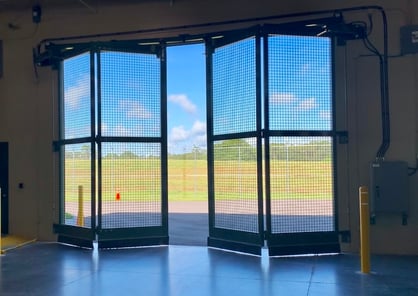
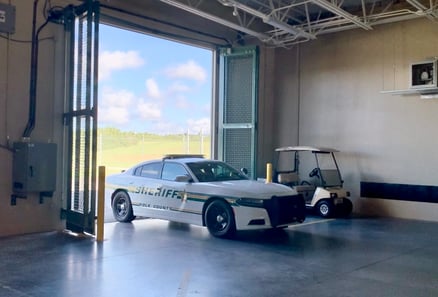
Arrestees enter through two separate doors — one for adults and one for juveniles — ensuring the two populations never cross paths. A third door, set apart from both entrances, handles releases so departing individuals don’t encounter incoming arrestees. The sally port also includes a shower for individuals who arrive covered in mud, debris, or other contaminants — a practical feature in a region where some suspects are known to hide in swamps.
For a facility that processes roughly 30,000 bookings each year, this level of separation is more than a convenience; it is a foundational safety measure. The operational gain the sally port provided was no longer bottlenecking intake through a single door. Adult, juvenile, and release traffic move on separate tracks at the same time, reducing delays and allowing officers to process individuals without waiting for pathways to clear.
2. Layered screening that catches contraband at the door
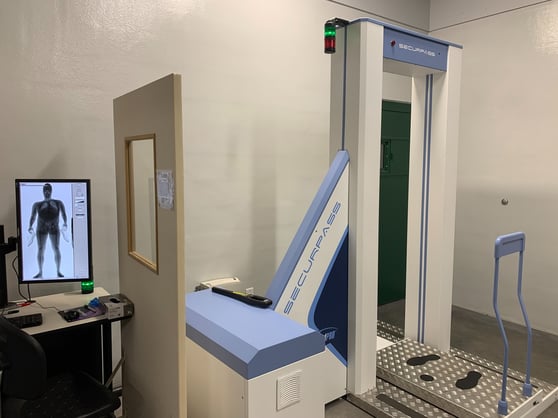
Once inside, screening runs in three layers. A walk-through metal detector — similar to the machine you pass through at the airport — catches any metal object on a body or clothing item. Next, staff perform a pat-down and wand search to catch what the detector may miss. Finally, the SECURPASS full-body X-ray scanner catches the rest. If anything suspicious turns up during these searches, staff conduct a strip search.
Only after all three steps is the arrestee placed in a clear glass holding cell, in handcuffs, to await processing.
The result: contraband gets caught at the door, not discovered in a housing unit later. Fewer items slip through, which means fewer in-facility incidents to respond to and document.
3. Clear, shrink-wrapped property storage
Once ready for processing, the arrestee will swap their clothing and personal belongings for a uniform. Their belongings are kept in a clear plastic bag and are shrink-wrapped to eliminate any air.
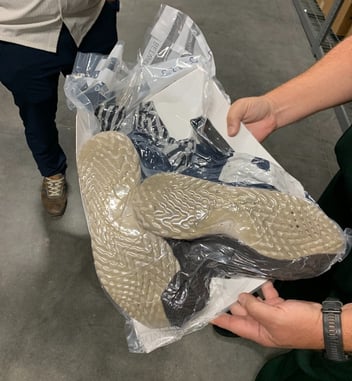
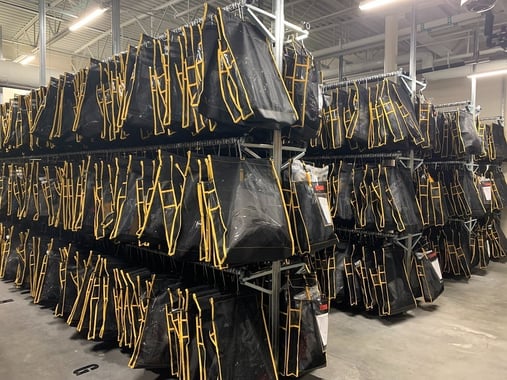
In the previous facility, belongings went into brown paper bags on standard shelving, which took up more space, made items hard to identify, and caused an immense amount of confusion when staff searched for a specific item (and a strong odor; think about all the socks and shoes). Now, the clear, shrink-wrapped bags are stored in an Inmate Property Room holding roughly 3,000 bags, neatly organized on hanging racks and easy to find and verify.
At release, staff pull the right bag in seconds instead of digging through shelves of identical paper sacks. Faster out-processing, fewer property disputes, fewer claims against the agency.
4. Open-concept waiting with built-in privacy
After mugshots and fingerprints, the arrestee waits in the processing center's waiting area. It runs like a DMV — open-concept, with names called to a screen — but private booths wall off medical and pretrial services so sensitive conversations stay confidential.
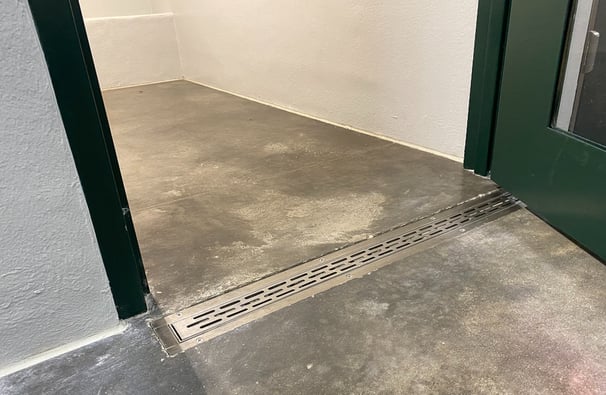
The medical room holds three nursing stations behind glass, a leap over the previous facility's open room that was easily interrupted. And padded holding cells ring the waiting area for anyone who acts out, with drains set outside each cell so they can't be clogged from within.
“We specifically built door-wide drains in front of every cell so when an inmate breaks a sprinkler head or floods their toilet, it only affects the cell. Everywhere stays dry as the water runs into the drains right outside the cell door,” said Laurell. “It was very handy. One of the best things we did.”
Eight hours is the maximum hold before someone is released, transferred to a county jail, or taken to court. That ceiling is the operational target the entire layout is built to hit. Open sightlines and on-site medical and pretrial keep people moving toward an exit instead of stacking up in holding.
Here's how the previous building compares to the new one:
|
Design element |
Previous facility |
Modern facility |
|
Sally port entry |
Single roll-up door (frequent jams) |
Four bi-fold doors |
|
Arrestee paths |
One shared entrance |
Separate adult, juvenile, and release doors |
|
Security screening |
Limited |
Metal detector + wand + full-body X-ray |
|
Property storage |
Brown paper bags, open shelving |
Shrink-wrapped clear bags, ~3,000 on racks |
|
Medical & pretrial |
Open, easily interrupted |
Glass-walled stations with privacy |
|
Oversight |
Limited sightlines |
Elevated sergeant's office, live HD cameras |
5. Elevated oversight gives technology a place to fit in a modern jail facility
Concrete and steel set the stage. Technology runs the operation.
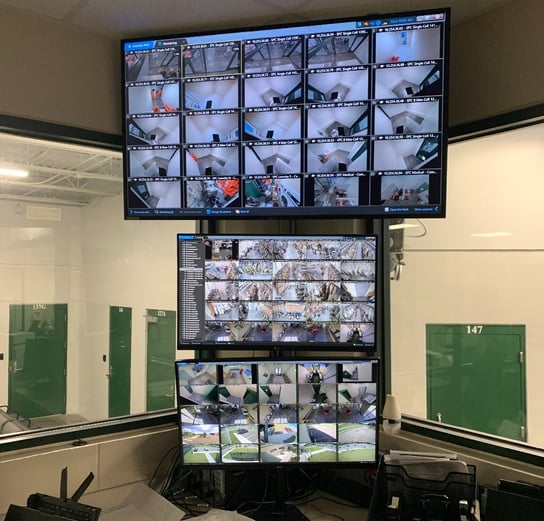
Polk County's waiting area sits under constant supervision from an elevated sergeant's office with live, high-definition cameras and full sightlines across every booth, the medical area, and pretrial services. One sergeant sees everyone — seated, at the phone booths, in medical, using pretrial.
Replacing a single-door sally port is a once-in-a-generation capital project. Replacing paper logs with real-time tracking and accountability is a software decision an agency can make at any stage of a build.
Modern facilities increasingly treat the two as one project: design the spaces for separation and visibility, then layer in technology that records every check, movement, and incident with a time stamp. The building creates the sightlines. The platform creates the record.
That record matters most when something goes wrong. A padded cell protects an inmate in the moment. Thoroughly captured cell checks and rounds protect the agency afterward.
How Polk County modeled its facility is a similar model most agencies follow when they modernize: pair a smarter building with a platform that captures what happens inside it. For a growing number of agencies, that platform is Command Cloud — GUARDIAN RFID's officer experience platform (OXP).

How should an agency plan a new processing center?
Laurell's advice — now informed by work on both the agency and technology sides — was practical: travel and tour other facilities first.
Borrow the ideas that work, then combine them with the processes that your own team will thrive with. Sit down together, let everyone weigh in, and talk budget openly. Do that, and the blueprint starts drawing itself.
It's worth the effort. Polk County runs the facility with about 22 civilian staff and five deputies on an average day — people who now work in safer, better-organized spaces. The reward of building for the future shows up every shift.
FAQs
What makes a jail facility "modern"?
A modern jail facility is built around movement, separation, and visibility, then backed by cloud-based operational technology instead of paper logs. Separated entrances, layered screening, open sightlines, and real-time tracking work together to reduce incidents and speed up processing.
How does a modern jail facility improve officer safety?
It designs risk out of the building. Separate adult, juvenile, and release paths to keep populations from crossing. Layered screening catches contraband at the door. Elevated sightlines let one sergeant supervise the entire floor — fewer blind spots, faster response, less exposure for staff.
Can an existing jail be modernized without building a new facility?
Yes. A new building is a once-in-a-generation capital project, but the technology layer isn't tied to one. Agencies can replace paper rounds and logs with a platform like Command Cloud at any stage — adding real-time tracking, documented checks, and accountability without pouring concrete.
How much does it cost to build a modern jail processing center?
Construction costs vary widely by size, region, and scope, so there's no single number. But the operational technology that runs the facility is a separate, far smaller decision — and one an agency can budget for independently of a build. The payoff shows up
in fewer incidents, faster processing, and cleaner documentation.
Polk County didn't just build a newer, nicer building — it built a faster, safer operation. For agencies planning a modern jail, the lesson is clear: facility design and operational technology aren't separate investments.
The building creates the sightlines. The technology brings the operation to life. It connects staff, workflows, and critical information in real time, helping agencies maximize compliance, reduce risk, improve efficiency, and maintain accountability across the facility. Together, they transform a well-designed jail into a safer, smarter operation with measurable results — every shift, every round, every booking.
Laurell's first piece of advice was to tour other facilities before you build. Start that tour from your desk. Connect with a GUARDIAN RFID C.O.R.E. team member — a Correctional Operational Resource Expert — to talk through your facility's unique needs and what it takes to build a modern jail facility that runs safer, smarter operations.

IMAGE CITATION:
-
Blog Header Photo by H2Engineering
- Construction Photo Ray Donnelly on Unsplash