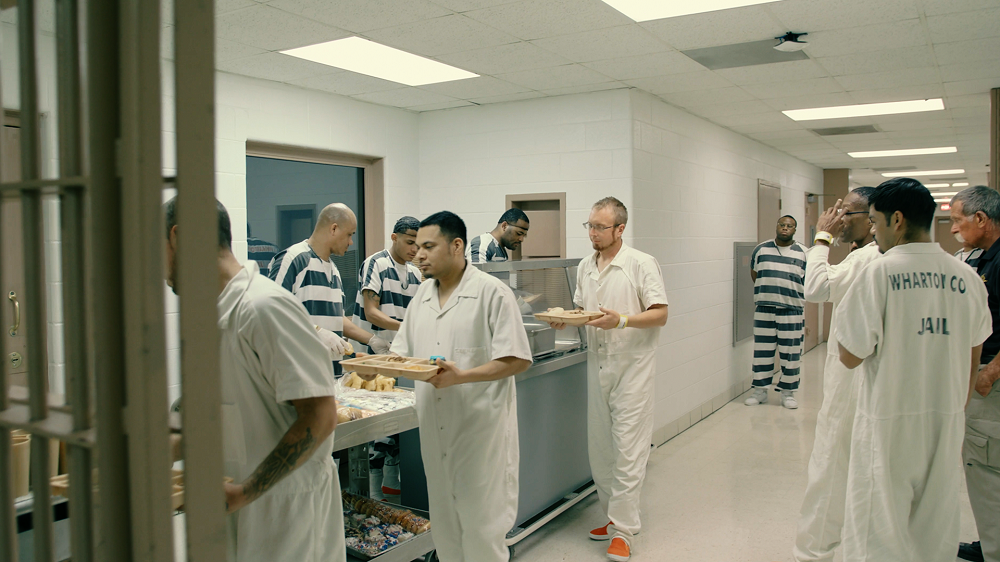
In 2013, an inmate named Rocky Delgado Marquez escaped custody twice in less than eight months using the same method: he swapped inmate wristbands with others who had a similar physical appearance. His escape was attributed to a combination of human error and a malfunctioning fingerprint matching system.
A wristband can be traded. A fingerprint reader can fail. A face is considerably harder to hand off to someone else, and that is the premise behind facial recognition in corrections.
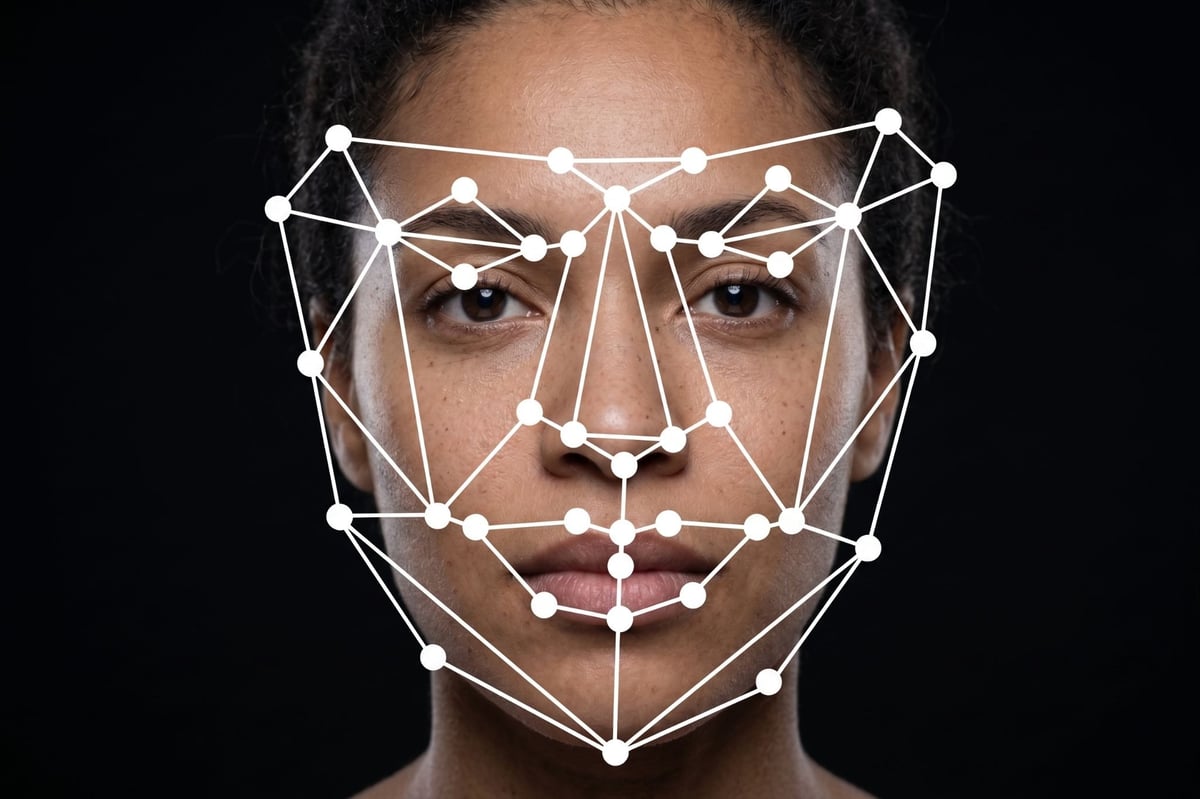
Facial recognition is a branch of computer vision. It uses image processing, feature extraction, and machine learning to recognize faces, comparing a person's unique facial landmarks against known identities. Those landmarks are stored as facial geometries, sometimes called "face vectors."
You are almost certainly already using it, and have been for years. Back in 2010, Facebook began automatically detecting faces so you could tag friends in photos and videos. In 2017, Apple built facial recognition into the iPhone to replace the fingerprint reader for unlocking the phone and authorizing payments.
If you carry a smartphone, you have unlocked it with facial recognition dozens of times today without thinking about it. Biometric security company iProov found that over 70% of Americans prefer facial recognition for access and identity management in banking, citing three factors: speed, security, and convenience.
Social media tagging, public security cameras, and retail and building access systems all use it constantly, often without you noticing. At major airports, facial recognition speeds security checks like passport control and boarding. Travelers may have their faces scanned at check-in or for automated border control.
How Does Facial Recognition Work?
Facial recognition works by first detecting faces in photos or videos using specialized software that spots facial features even when the person is turned or in imperfect lighting conditions.
Once a face is detected, the system maps key features such as the distance between the eyes, the shape of the nose, and the curve of the jaw, creating a “template” of the face. This template is then converted into a unique set of numbers, functioning like a digital fingerprint for the face.
Each person’s face has a slightly different pattern, allowing the system to distinguish one face from another. The system then compares this “faceprint” to others stored in a database to find a match. If it finds a strong match, it can identify the person or verify their identity, such as unlocking a phone. Essentially, facial recognition technology transforms a photo of a face into numerical data and compares it to other data to determine identity.
One-to-Many vs. One-to-One Matching
In corrections, certain use cases of facial recognition will use a one-to-many match and others a one-to-one match. The distinction is crucial.
|
Match type |
What it does |
Everyday example |
|---|---|---|
|
One-to-many (identification) |
Compares a person’s face against a large database of faces to determine their identity. The system searches through thousands or even millions of faces to find a match. |
A security camera at an airport scanning faces against a watchlist. |
|
One-to-one (verification) |
Compares a person’s face to one specific template to confirm their identity, a yes-or-no check rather than a search. |
Unlocking a phone, where the system checks the current face against the stored faceprint. |
Is Facial Recognition Accurate?
Yes. Under ideal conditions, and especially with advanced systems built on deep learning, facial recognition can be highly accurate. But "ideal conditions" carries a lot of weight in that sentence. Accuracy is not a fixed number. It rises and falls with image quality, lighting, camera placement, the algorithm, and how well the database is managed.
How Is Accuracy Measured?
Measurement starts the same way matching does. The system captures key facial features, such as the distance between the eyes, the shape of the nose, and the line of the jaw, and builds a template from them. That template is compared against the others stored in the database, and every comparison produces a similarity score showing how closely the features line up.
Those raw similarity scores are then adjusted for conditions such as image quality and lighting before being converted into a confidence score. That adjustment step is what keeps a poorly lit capture from being scored as though it were taken under ideal conditions, and it is why the final number should be treated as one input to a match decision rather than as proof on its own.
Is Facial Recognition Biased?
When people wonder if facial recognition is biased, the stereotype is that facial recognition is prejudiced against certain minorities. The truth is, facial recognition is not anti-Black, anti-Asian, or anti-Hispanic. But there are reasons for the stereotype.
Historically, facial recognition has performed with higher accuracy on certain groups, usually Caucasian men. The main reasons for this bias include the training data, which often consists of many photos of Caucasian males, leading the system to recognize them better. Additionally, different groups have different facial features, and if the system isn’t trained on a diverse set of faces, it struggles with those it hasn’t seen as much.
Lighting and image quality also play a role. Darker skin may be harder for the system to process in poor lighting conditions compared to lighter skin. Remember, facial recognition works based on its mathematical ability to see a faceprint of a person’s individual face, or the unique landmarks that are comprised in their facial geometry.
Because of these issues, facial recognition technology can sometimes make mistakes, such as misidentifying someone or failing to recognize them at all (this is known as a false negative: not recognizing the face at all).
Bias is addressed the same way it is created, through data. There are three ways to continually guard against it:
- Diversify and balance the training data. Train on a wide variety of faces across races, genders, and age groups, with no single group overrepresented, so the system learns to recognize everyone equally well.
- Test and evaluate for bias regularly. Continually assess accuracy across demographic groups. Where discrepancies show up, retrain the system with more diverse data until it performs uniformly.
- Improve how the algorithm handles lighting and image quality. Making sure the system reads faces accurately in different lighting and at different image qualities reduces errors, particularly for individuals with darker skin tones.
How Do Jails and Prisons Use Facial Recognition?
Corrections has one of the highest rates of non-fatal work-related injuries of all professions. In the United States, an average of 11 correctional officers are killed each year in the line of duty, often due to assaults, violent acts, and transportation-related fatalities. Tens of thousands of officers are injured each year. Knowing who is where, and confirming it rather than assuming it, is the foundation of reducing that exposure.
There are numerous use cases of facial recognition for jails and prisons. Here are five of the most common:
1. Identifying Inmates
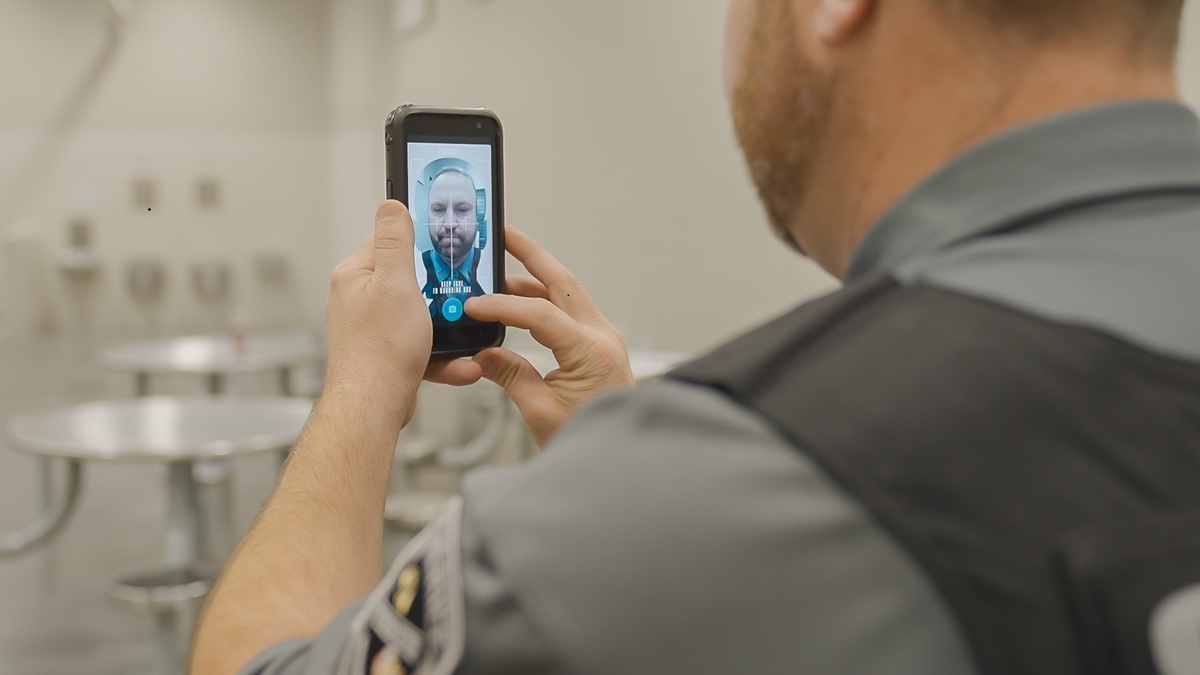
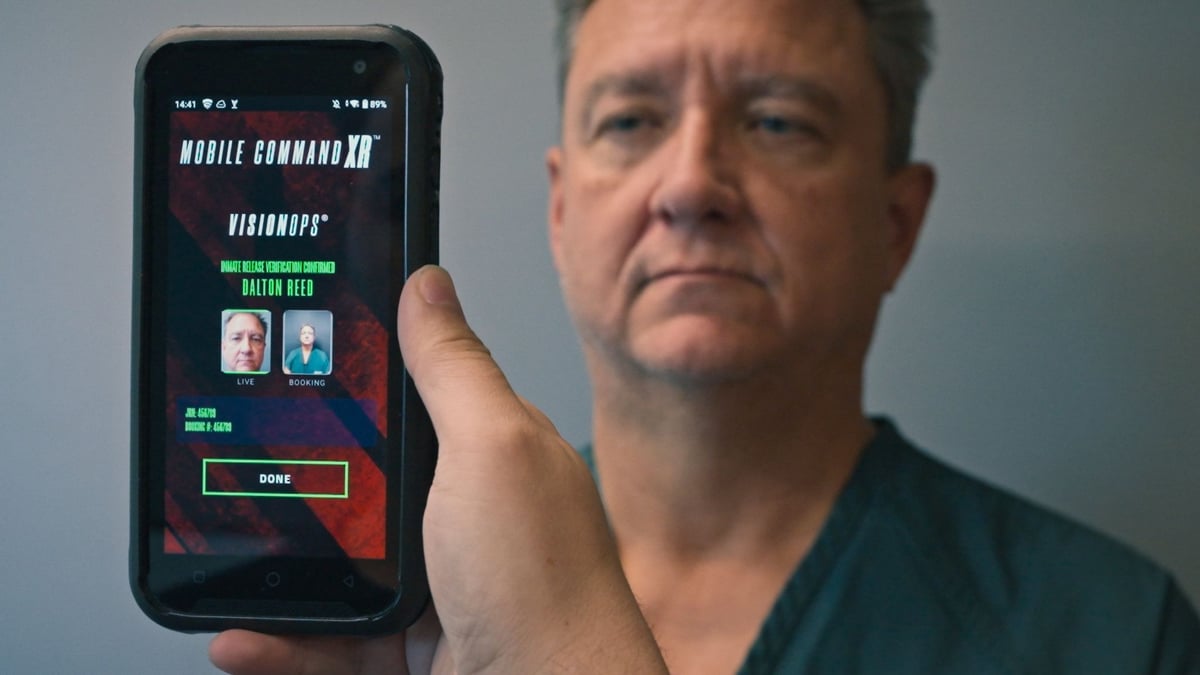
Facial recognition strengthens inmate identification at booking, verifying identity quickly and accurately while reducing the risk of misidentification or mistaken release. This is especially useful for facilities with large populations or for individuals who alter their appearance.
2. Monitoring Movement
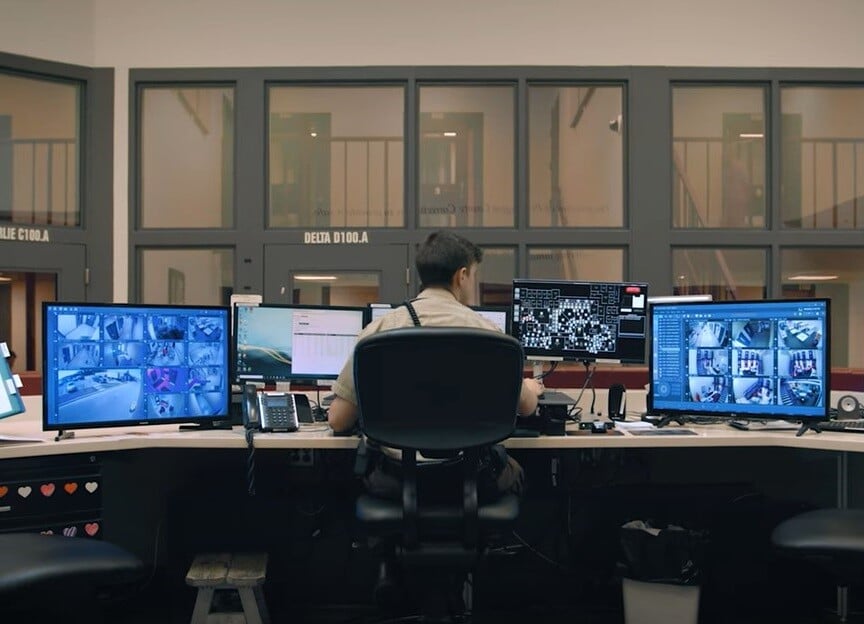
Facial recognition can be integrated into security cameras and software systems to monitor the movement of inmates within the facility. This can help track where an inmate is at all times, ensuring they stay in designated areas and reducing the chances of escapes or violent incidents.
In high-security zones, such as areas with violent inmates or sensitive areas like armories, facial recognition can be used to monitor activity and alert authorities if unauthorized persons enter restricted areas.
3. Enhancing Security for Staff
In addition to monitoring inmates, facial recognition can be used to verify the identity of staff members entering and exiting secure areas. This helps ensure that only authorized personnel are in sensitive zones, preventing security breaches. This can be especially helpful for officers entering housing units of the opposite sex, supporting automated compliance with the Prison Rape Elimination Act (PREA), the federal standard governing sexual safety in custody.
If an unauthorized individual, such as a visitor or outsider, tries to gain access to restricted areas, facial recognition can trigger an immediate alert, allowing for a swift response.
4. Screening Visitors and Vendors
Facial recognition helps reduce contraband smuggling by verifying that only authorized visitors and employees enter the facility, minimizing the risk of drugs, weapons, or phones coming through the front door. It confirms the identity of individuals visiting inmates, preventing false identities. It also secures remote communication by verifying participants during video conferences, preventing impersonation and ensuring only authorized legal professionals access confidential inmate conversations.
5. Enhancing Accountability and Transparency
Facial recognition can be paired with surveillance footage to document interactions and incidents for compliance and defensibility. This can provide clear, objective evidence in the event of disputes over inmate behavior or staff actions.
The technology can also help deter mistreatment by staff or other inmates, as it offers a real-time record of who was where and when, ensuring accountability and reducing potential incidents of misconduct. In the aftermath of a riot or major incident, it can identify involved inmates or those hiding within the facility, helping restore order faster.
What Should You Know Before Deploying Facial Recognition?
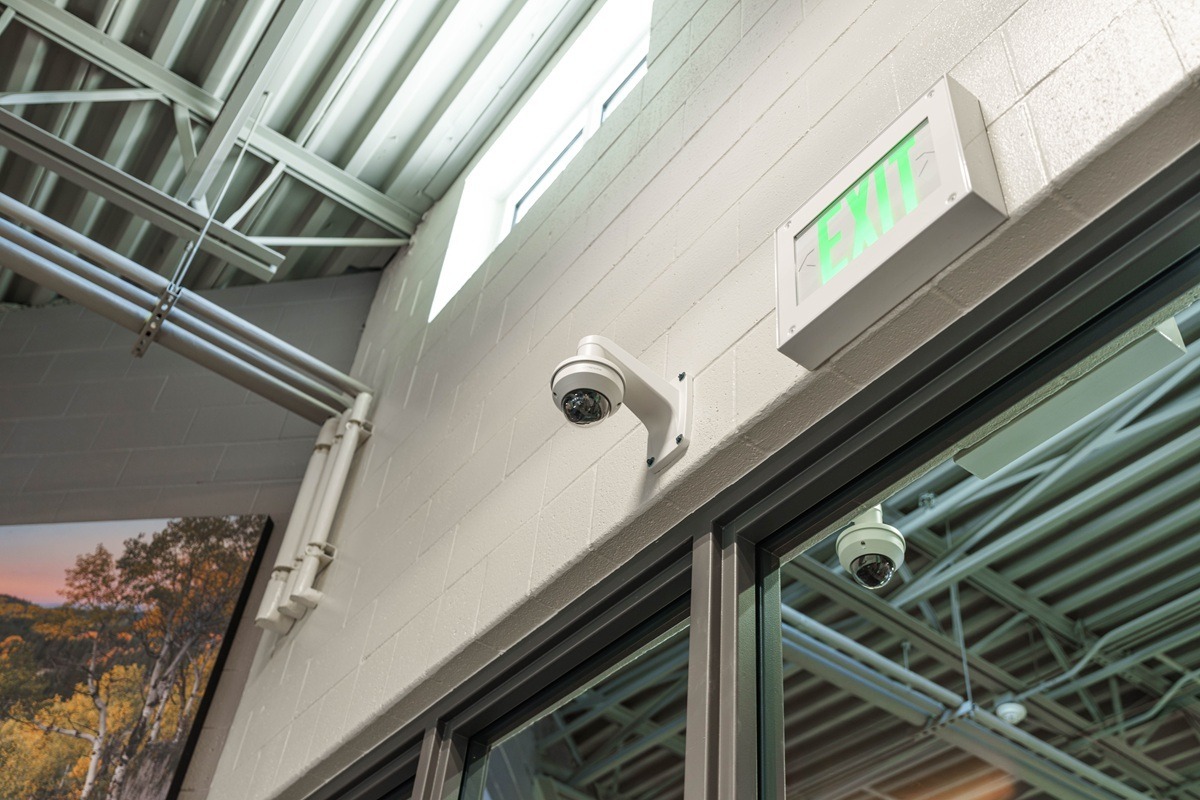
Facial recognition in a correctional setting depends on more than software, and the honest answer is that most facilities cannot simply switch it on with the cameras they already have. Older cameras often lack the resolution for reliable face detection, and accuracy drops in poor lighting, at long distances, and in crowded movement. Camera placement, mounting height, and capture distance all matter.
Some facilities solve this by running a second camera network dedicated to facial recognition while keeping their existing cameras for general surveillance. That means a real hardware and integration cost, not just a software line item.
There is a legal dimension as well. State biometric privacy laws, notably the Biometric Information Privacy Act (BIPA) in Illinois and similar statutes in Texas and Washington, govern notice, consent, retention, and disclosure of biometric data, and BIPA applies to private entities rather than government agencies. Facilities should confirm their biometric and privacy policies with counsel before deployment, and post signage explaining what is being collected and where.
Frequently Asked Questions
Is facial recognition legal to use in a jail or prison?
Generally yes, but it depends on your state, and public agencies and private operators are not always covered by the same rules. The dedicated biometric privacy laws in Illinois, Texas, and Washington impose the strictest requirements around notice, consent, retention, and disclosure, and Illinois BIPA applies to private entities rather than state or local government agencies. Facilities should confirm their obligations with counsel and post clear signage about what is collected and how it is used.
Will facial recognition work with the cameras we already have?
Often not. Facial recognition needs higher resolution and better positioning than general surveillance requires. Many facilities add a smaller, dedicated camera network for recognition rather than replacing everything at once.
What happens when the system cannot confirm a match?
A well-configured system does not guess. It fails closed, flagging the discrepancy and alerting an officer rather than approving the action. In a release verification workflow, that means the release stops until a human resolves it.
Is facial recognition accurate on all skin tones?
Modern systems trained on diverse data perform far better than early ones, but lighting and image quality still affect darker skin tones more. This is a reason to evaluate a vendor’s testing across demographic groups rather than accepting a single headline accuracy number.
How is facial recognition different from fingerprinting?
Fingerprinting requires contact and cooperation, and readers fail. Facial recognition is contactless and can run on a photo already being captured, which is why the two are often used together rather than one replacing the other.