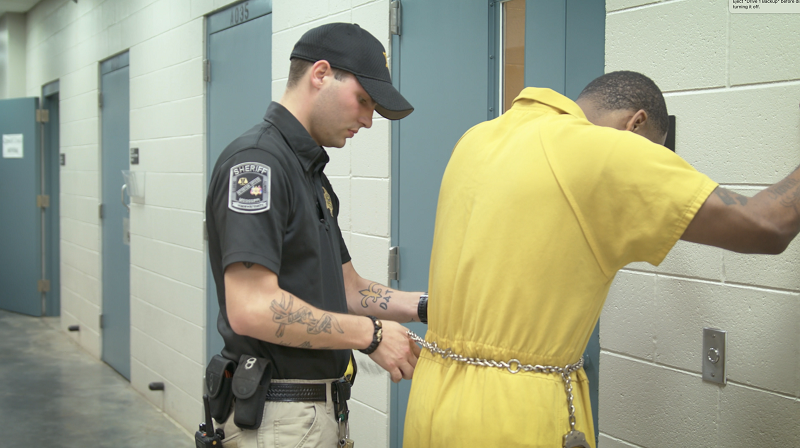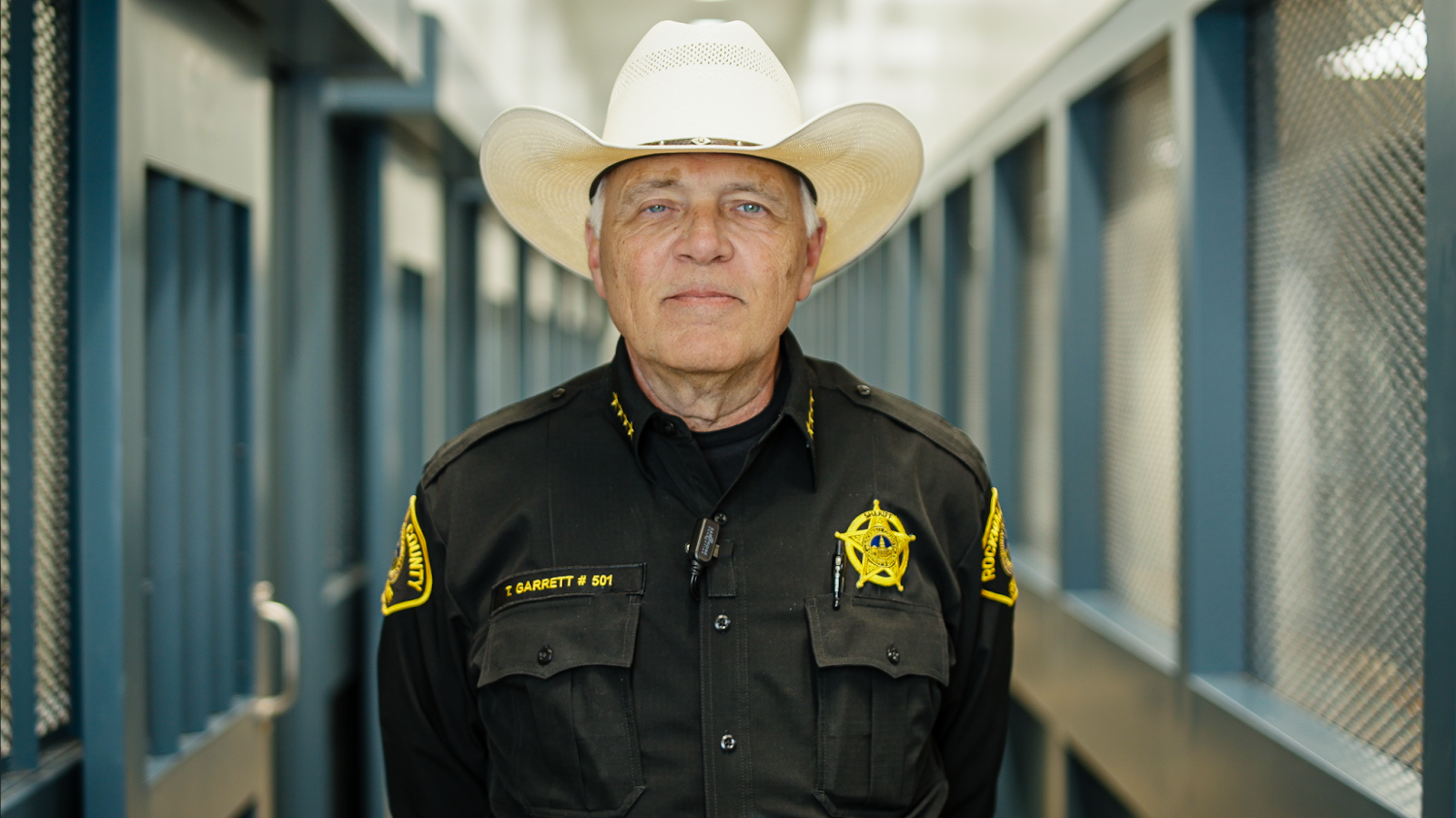
As the former director of corrections for a mid-sized jail in northeastern Pennsylvania, I can attest to the realities of working in corrections and how the demands placed on our nation’s corrections officers can bring about a very specific set of stressors, which, if left unresolved, can lead to or exacerbate stress, both physically and mentally. Over time, these stressors, which can vary from acute to chronic, can have a detrimental effect on the officers’ physical and mental wellness at work and likely carry over into their home life.
When compared to the general public, those who work in corrections experience exponentially higher rates of stress—often leading to burnout that impacts every aspect of life, including increased rates of divorce, cardiovascular disease, obesity, depression, addiction, alcoholism, PTSD, and suicide. In fact, the suicide rate of correctional staff is nearly four times that of the public. To compound matters, the average life expectancy of a corrections officer is 59 years old, compared to the national average age of 79 years old. That 20-year mortality gap in life expectancy is significant, and that MUST change.
The Cost of Constant Vigilance
While many internal and external variables contribute to the stress of the job, one of the most significant is the inherently high-stress nature of working in corrections itself, and the constant vigilance that comes with it. Complacency, which I jokingly refer to as the evil “C” word, can conceivably lead to irreparable harm or death to the officer and others; there is absolutely no room for complacency in corrections.
Corrections leaders are uniquely positioned to drive meaningful changes that create a wide-reaching positive influence on the officers they lead. Whether ranked as a corporal, sergeant, lieutenant, or captain, each leader carries responsibility to improve team morale and shape a healthier culture of American corrections.
This requires mutual trust among leaders and team members, which can be established through ongoing, open, transparent communication. When officers’ voices are being heard and ideas considered, operational stability improves. There’s no denying that improving morale and job satisfaction amongst your officers will have a positive impact on your department’s recruitment and retention efforts, which, as we know, is a significant concern for today’s jail and prison administrators.
“The most important aspect of the relationship between a supervisor and their officers is the concept of running the jail together,” said Steve Gullo, a Northampton County correctional officer with nearly 30 years of experience. “There needs to be a mutual respect and appreciation for one another.”
In a CorrectionsOne interview, Roebuck (2026) emphasized that, “Many veteran officers said the job once carried pride, identity, and stability. Things that they believe have eroded over time.” Being in the corrections field for 37 years, I must concur.
The Need for Authentic Leadership
In order to bring more awareness to the common stressors that officers face, there needs to be a change in how corrections administrators lead their organizations. We need authentic leaders who are seen as genuine role models for subordinates to emulate.
Lehigh County Jail corrections officer, Morgan Wise, once stated, “It is important that supervisors remain visible, approachable, and accessible, especially following a critical incident. It’s also important to recognize your employees by letting them know they are appreciated and if they ever need to talk, you, as the supervisor, will be there for them.”
One particular leadership style that has received considerable attention over the past decade is that of transformational leadership. A transformational leader goes beyond the routine task of managing day-to-day operations by continuously crafting visionary strategies for taking the organization to the next level of performance and success.
Think of it as upgrading your facility from “survival mode” to “thriving mode.” Transformational leaders embrace team building, inspire and motivate officers, and improve overall job satisfaction and morale.
The daily goal of a transformational leader is to create positive changes for the betterment of everyone in the facility, both those who serve in that department and those incarcerated. Transformational leaders set goals and incentives to push their employees to higher performance levels, while providing opportunities for personal and professional growth.
Transformational leaders work to create a positive, safe, secure working environment, aiming to be more like coaches and mentors to correctional officers rather than the traditional disciplinary, authoritative figures that most of us “old heads” are accustomed to having served under. They help officers feel valued, empowered, and appreciated, especially when their voices are not just heard but also deeply considered when updating policy and procedure.
But transformational leadership is not just a philosophy—it must be put into action through consistent, intentional behaviors. The following five strategies offer practical ways supervisors can begin building trust, reducing stress, and strengthening resilience among their officers.
Step 1: Foster Clear, Consistent Communication in a High‑Risk Environment
Clear, concise, transparent communication is vital in any personal or professional relationship—especially when it comes to recognizing and embracing the opportunities for “teachable moments” for growth. For example, instead of disciplining an officer for a minor infraction, it would be far more beneficial to use that opportunity to discuss why that particular policy is in place and how it relates to the bigger mission of the facility.
Although there are certainly instances where disciplinary action is necessary, transformational leaders seek to find opportunities to engage and teach their officers by focusing on what they are doing right as opposed to what they are doing wrong. I am personally a big communicator who embraces the concept of transparency. However, I also acknowledge that there are times when information is only necessary to be shared on a “need‑to‑know basis,” but let us be honest, most of what we decide to share with our department isn’t exactly top‑secret national security material.
In corrections, there are so many unknowns and uncertainties that can heighten stress and compromise the officer’s safety. Often, we become trapped in a state of “fight or flight,” which can adversely affect our physical and mental health.
As mentioned earlier, that heightened stage of hypervigilance is critical in corrections for our safety, but not being able to turn it off can lead to a host of health concerns. That is why it is important to emphasize the importance of clear, concise directives that can be disseminated through department-wide emails, during roll call, incident responses, and when there are policy updates.
Step 2: Model and Encourage Healthy Work‑Life Boundaries Despite Demanding Schedules
Today’s corrections officers are often faced with mandatory overtime and rotating shifts, leading to physical and emotional fatigue, which is typically exacerbated by subpar recruitment and retention efforts.
I often joke that no one truly aspires to work in corrections. We somehow land a position in this profession and end up staying because the profession offers job stability and security, decent benefits, and early retirement with a wholesome pension at an earlier age than most other professions.
I accepted my first position in corrections solely because it was the first job offer that I received. I had planned to stay one year to gain some experience and then pursue other interests. Well, the next time I looked up at the calendar in my office, 14 years had gone by, and guess what? I was still working in corrections.
Transformational leaders take a genuine interest in their officers’ well-being while maintaining clear, healthy boundaries. Whether celebrating an officer’s birthday, work anniversary, or promotion, recognizing officers who go above and beyond the call of duty can go a long way in boosting morale.
I was never one to accept that saving the life of a suicidal inmate is simply part of the officer’s job. Granted, it is, but to me, that is going beyond the typical day-to-day responsibilities. A supportive supervisor does not need to be an officer’s best friend, but showing genuine interest in an officer’s well‑being is immeasurable. A simple “How are you holding up?” can open the door to meaningful, stress-reducing conversations.
Step 3: Provide Supportive Workload and Post‑Incident Management
There are three types of stress.
- Eustress: Often temporary and minor, this is the type of nervous stress you feel before an interview, an exam, or public speaking.
- Acute: While typically short-term, this stress can come from having to work multiple mandatory overtime shifts over the past few weeks, leading the stress to build up if ignored.
- Chronic: This is the one that can be debilitating, especially in correctional environments, as it typically doesn’t come from one source. It can stem from the officer’s personal life, such as relationship troubles, financial concerns, caretaker responsibilities, etc., which can worsen when coupled with work-related stress and vice versa. Stress in home life can bleed into work life and vice versa.
Each stressor adds its own layer of strain, and together they create a work climate where stress becomes the norm rather than the exception. While challenging, a work–life balance is absolutely essential.
According to Spinaris (2026), “One of the most urgent challenges corrections faced in 2025 was the widening gap between widespread recognition of the need for staff wellness and the resources allocated to support it. Leaders across the country increasingly acknowledged that correctional staff, particularly custody staff, are experiencing extreme levels of anxiety, depression, PTSD, sleep disruption, substance misuse, and suicide risk. These conditions are almost certainly contributing to the profession’s epidemic-level turnover.”
Spinaris goes on further by emphasizing that, “Wellness is not optional in a profession defined by chronic high stress and extreme mental and physical health risks. Leaders must model emotionally intelligent, supportive leadership, reduce the stigma around seeking help, and embed culture-strengthening practices into policy, planning, and leadership development to strengthen peer support and maintain meaningful connections to frontline officers.” (Spinaris, 2025)
I wholeheartedly agree with these statements. I know firsthand how chronic stress can wreak havoc on our bodies and minds. In November of 2024, I suffered a cardiac incident that led to my being hospitalized for five days. I had to make adjustments in my life, or, as my cardiologist emphasized, “I’m destined to have a fatal heart attack.”
How many of us have said to ourselves, “I’m fine,” knowing that we were far from fine? If you find yourself drinking more, misusing prescription medication, experiencing mood swings, constantly exhausted, etc., you’re definitely not fine. And over time, chronic stress becomes relentless.
Fast forward to today, and I can say with certainty that I’ve gained control over my health by developing the skillsets necessary to keep chronic stress at bay. But this was not always the case.
In my former role, officers were constantly overloaded with additional duties and responsibilities that were largely due to staff shortages. When this occurred, there was rarely any time to fully decompress because fewer officers meant that there was an increased responsibility to cover more housing units, more inmates, and more crises, especially when you factor in the upsurge of mentally ill and oftentimes, violent offenders over the past two decades.
To combat the pressure often associated with working high-stress post assignments, I suggest rotating officers whenever possible, which is both fair and equitable to all officers. I also feel strongly that we, as corrections leaders, need to do a better job of post-incident debriefing after major incidents. It shouldn't be a one-and-done debriefing.
Why? Because major incidents shouldn’t be brushed under the rug. There needs to be additional follow-up in the hours, days, and weeks following a major incident, ensuring the team members are processing what they experienced. A supervisor who exudes confidence and encourages trust ultimately strengthens the team during times of uncertainty and sets a tone that motivates officers to work cohesively as a team.
Officers do not need a supervisor who, in the middle of a crisis, has a look on their face similar to the one you make when you try to remember if you left the stove on at home. A supervisor who acknowledges trauma exposure by offering access to peer support and other pertinent wellness resources is critical, especially since corrections officers experience trauma at rates far higher than the general population.
I’ve published a number of articles pertaining to understaffing and inconsistent, inadequate leadership in corrections. Corrections professionals are indisputably distrustful of outsiders, so they are more likely to approach and take advice from their peers, whom they know and trust, for the most part.
Shared experiences reduce the stigma associated with mental illness and debunk the misperception that you’re supposed to be tough and therefore, go through these traumatic events alone. Peer support consists of volunteer officers who receive training in active listening, recognizing traumatic responses, maintaining healthy boundaries, and knowing when to refer a fellow officer for professional help.
Step 4: Recognize and Validate Officer Efforts in a Profession Where Appreciation Is Rare
When corrections officers make the news, it’s often following an incident of corruption or some type of wrongdoing, or when they’ve been seriously injured or killed in the line of duty. Think about it. This creates a skewed perception of officers as being rogue, racist, lawless thugs, which is vastly different from reality. Because of this, corrections officers often feel demonized by the public and overlooked by the administration.
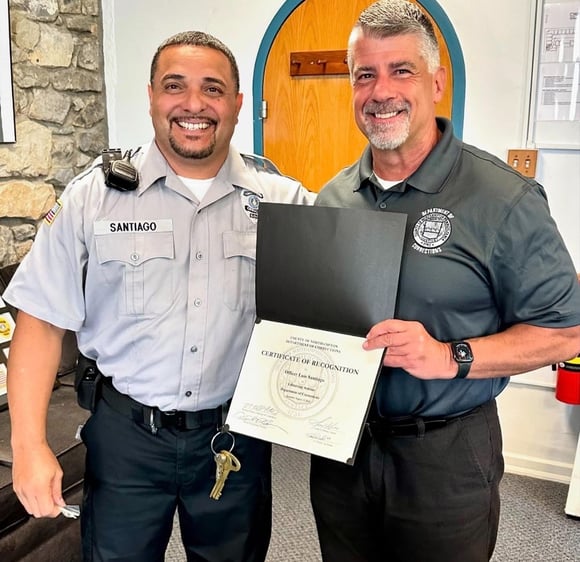
When I moved up the ranks, I made it a point to recognize my officers in a department-wide monthly newsletter, along with emails, photo opportunities with the top administration, and issuing commendations for those who excelled in the performance of their duties. Sometimes it is as simple as saying, “Hey, you handled that situation really well,” or “I noticed how you helped your Officer Smith earlier.” This may sound trivial, but meaningful recognition in acknowledging how an officer handled a particular situation can be quite powerful for the officer and their peers.
However, it’s important to note that we don’t want to create a culture of handing out trophies to everyone because that diminishes the value of being recognized. Over the course of the year, I would say that I formally recognized, through commendations, maybe a dozen, give or take a few, out of the 180 officers under my command. The majority were recognized informally through verbal appreciation and supervisor notes, without all the hoopla of the formal celebrations.
Step 5: Creating a Culture of Psychological Safety Within the Facility
Changing the culture of corrections starts at the top of the funnel with the administration and their ability to provide psychological safety for this staff. This refers to an officer’s ability to speak up about safety concerns, report unethical behaviors and practices, and ask for help without fear of retaliation.
Trust is earned, so we can’t expect change to occur overnight. It is going to take time to build the trust necessary to create positive change. If an officer brings an important safety issue to their supervisor and nothing is done about it, or it’s simply dismissed, trust is broken. For me, it took close to a solid year to start building “some” trust in an environment where trust is not given freely or lightly. Having an open-door policy can go a long way in establishing trust in an otherwise distrustful environment.
Northampton County corrections officer, Keith Meeker, with 25 years of experience in corrections, feels strongly that “mandatory stress management training needs to be provided annually,” and I couldn’t agree more with him. He goes on further to state that supervisors must be trained to recognize and address when an officer is stressed and in need of assistance.
Turning a blind eye or simply dismissing the telltale signs that the officer is stressed can create an unsafe environment for everyone within the facility, inmates and officers alike. When I became the Director of Corrections, officers were nervous when they were summoned to my office. Similar to being called to the principal’s office when you were in high school, being called to the director’s office traditionally meant that you were in trouble. However, I used the opportunity to congratulate rather than criticize my officers.
Leadership That Lightens the Load
Transformational leaders provide consistent, supportive guidance, strengthening officer resilience and institutional stability. Practicing transformational leadership is especially effective in correctional environments because it counteracts the chronic stress, rigidity, and hypervigilance that often define the culture that most of us are familiar with.
How often have we heard, or maybe have even said out loud, “No news is good news”? In corrections, no news IS good news, and it deserves to be acknowledged. And let us be honest, working in corrections can feel like a never-ending game of Whack-a-Mole at times, so celebrating the wins, even the small wins, can be powerful.
Now, I am admittedly an idealist, but also a realist. Corrections will never be a stress-free profession, but we can definitely make some beneficial improvements. By communicating clearly, supporting a work-life balance, modeling positive, professional behaviors, and recognizing achievements, corrections leaders can create an environment where officers feel valued, supported, and empowered in the decision-making process.
Transformational leadership is not about being perfect or pretending the job is easy, because it is not. It is about showing up and a willingness to lead by example. When supervisors embrace these strategies, they help build a culture where officers can thrive, not just endure. And in a field where burnout is common and morale is low, that kind of leadership is not just helpful; it is essential.
At the end of the day, corrections officers deserve to work in an environment where they feel safe, respected, and appreciated. Supervisors who commit to these practices make a meaningful difference not only in the lives of their officers but in the overall stability and success of the entire facility. And if that means fewer stressed‑out officers, smoother operations, and maybe even a few more smiles during shift change, then that is a win worth celebrating.
References
Roebuck, S. (2026, February 4). Corrections1 readers respond: What pushes good officers out
and what might bring them back. Retrieved on February 4, 2026 from, https://www.corrections1.com/jail-management/corrections1-readers-respond-what-pushes-good-officers-out-and-what-might-bring-them-back
Spinaris, C. (2025, December 30). Roundtable: How the corrections profession was challenged
in 2025. Retrieved on February 3, 2026 from, https://www.corrections1.com/year-review/roundtable-how-the-corrections-profession-was-challenged-in-2025?utm_source=taboola&utm_medium=personalized-push