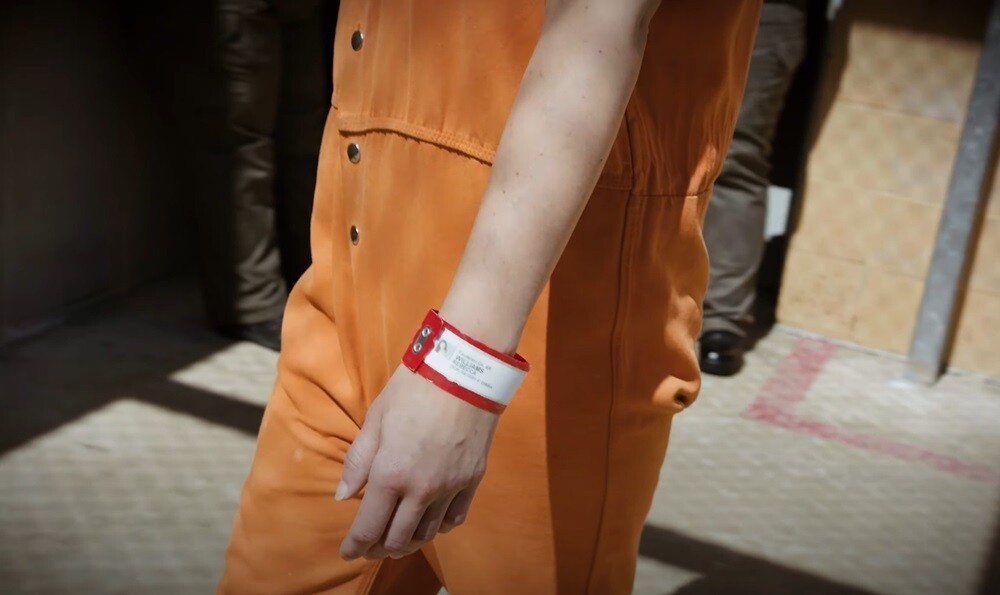
In 2013, an inmate escaped from custody twice in less than eight months using the exact same method: he swapped inmate wristbands with other inmates he had befriended. In both cases, the inmate shared a similar physical appearance with the others who were persuaded into swapping wristbands.
The conniving inmate: Rocky Delgado Marquez.
A career criminal, Marquez was on trial for a series of charges in Arizona: misconduct involving weapons, influencing a witness, perjury, felony criminal damage, forgery, and driving under the influence. He was also the subject of charges stemming from a federal drug distribution conspiracy. In May 2012, Marquez swapped wristbands with another inmate who was scheduled to be released. He walked out of the Lower Buckeye Jail in Phoenix under the assumed identity.
A manhunt ensued.
Eight months later, Marquez was found in Detroit living with relatives. He was also in possession of several fraudulent identification documents and a loaded AK-47 assault rifle. He was booked into the Wayne Co. Jail. Eight days later, he escaped from the Wayne Co. Jail using the exact same tactic: he convinced another inmate to swap wristbands and was released in error.
According to an article in MLive.com, "His escape was a lot more complex" than just exchanging bracelets, said Dennis Niemiec, a spokesman for Wayne County. "There was human error, there was also a machine that had broken down... but there were systems in place that broke down on the human side." Niemiec said there is a machine that matches fingerprints to other inmate data, which is used for identification. However, that machine was broken when Marquez escaped.
Marquez was eventually apprehended by U.S. Marshals in a city-center apartment in Hermosillo, Sonora. He pleaded guilty to his charges and was sentenced to 18 years in prison. While there’s no national database on the total number of inmate escapes from jails and prisons each year, false personation is not an uncommon tactic used by inmates to escape.
In this blog, we’re going to talk about:
- What inmate release verification is
- How inmate release verification works
- What to consider when it comes to using inmate release verification to augment your inmate identification needs
Inmate Release Verification
Inmate Release Verification or “IRV,” is a capability in Command Cloud that uses facial recognition and RFID to authenticate the right inmate is being released from custody. It uses two-factor authentication (2FA) from the inmate’s RFID wristband or RFID card, and the inmate’s unique facial geometry generated by the native facial recognition model of Command Cloud.

Two-factor authentication, or 2FA, adds an extra layer of protection. Rather than relying on just an RFID tag alone, which could be swapped or stolen by inmates, 2FA requires both forms of identification to authenticate an inmate’s identity: something you have (e.g. an RFID credential) and something you are (e.g. facial recognition.)
Prior to the inmate being released from custody, a booking officer will use the Inmate Release Verification module in Mobile Command XR, scan an inmate’s RFID credential, then take a photo with their SPARTAN. The photo or image taken during the release process will be compared to the facial landmarks of the inmate identified during IVR and provide confirmation of a match. If there is not a match, IVR will display a message that the release identity has failed.
How Does Facial Recognition Work?
In simple terms, facial recognition "reads" your face like a unique, digital map, and then checks if that map matches what it already knows about you.
Command Cloud’s facial recognition model converts face measurements into a mathematical model or template of your face. This template isn’t a photo of your face. Instead, it's a set of data points that represent key features of your face. Think of it as a digital faceprint—it’s a unique, abstract representation of your facial features.
In the case of IVR, facial recognition uses a one-to-one matching approach: because the system scans an RFID tag first, and the RFID tag can only be assigned to one person (and that person can only have one facial geometry), an image taken during the IVR process is only comparing against the facial geometry related to the RFID tag value. In effect, it’s not dissimilar to using facial recognition to unlock your iPhone or logging into an app.

Does Inmate Release Verification Replace Our Fingerprinting Systems?
In most jails and prisons, fingerprinting is a standard procedure when an inmate is booked into custody and is typically used again when the inmate is released, especially if they are being released on bail, transferred to another facility, or released after serving their sentence. However, not every facility uses fingerprinting consistently before every release, and the specific procedures can vary depending on the jurisdiction, facility type, and security protocols.
While fingerprinting is common, it’s not universally applied at the time of release. Some facilities may not have access to modern fingerprinting technology or automated identification systems, which could prevent them from taking fingerprints at every release.
In these cases, jail staff may compare the inmate to a physical printout of the inmate’s mugshot and use human judgment to “confirm” identity. If it’s an inmate staff have a strong familiarity of, their human accuracy can be well north of 90%. However, if it’s an inmate they have low familiarity with, accuracy can vary from 50% to 70%.
Staff may mistake an inmate for another inmate if they have a similar appearance or if they rely on mental shortcuts. If a face looks similar to someone you know, your brain may "fill in the gaps" by mistakenly identifying the wrong person.

Inmates stealing identities to escape from jail is a rare occurrence. But when it does happen, it usually involves a complex combination of manipulation, theft, and human error. Security measures in most correctional facilities make it difficult for inmates to successfully impersonate someone else and escape without detection. Most escapes tend to involve more traditional methods, overpowering staff or taking advantage of procedural gaps.
Errors releasing inmates, while not common, do occur and can result in potentially significant security concerns for your local or regional community. A short-term search for an inmate can cost tens of thousands of dollars when factoring in personnel, surveillance, and equipment costs. Long-term searches can easily cost hundreds of thousands of dollars (or more), especially when local, state, and federal agencies are involved.
Protected by Patent number: 12,205,405.