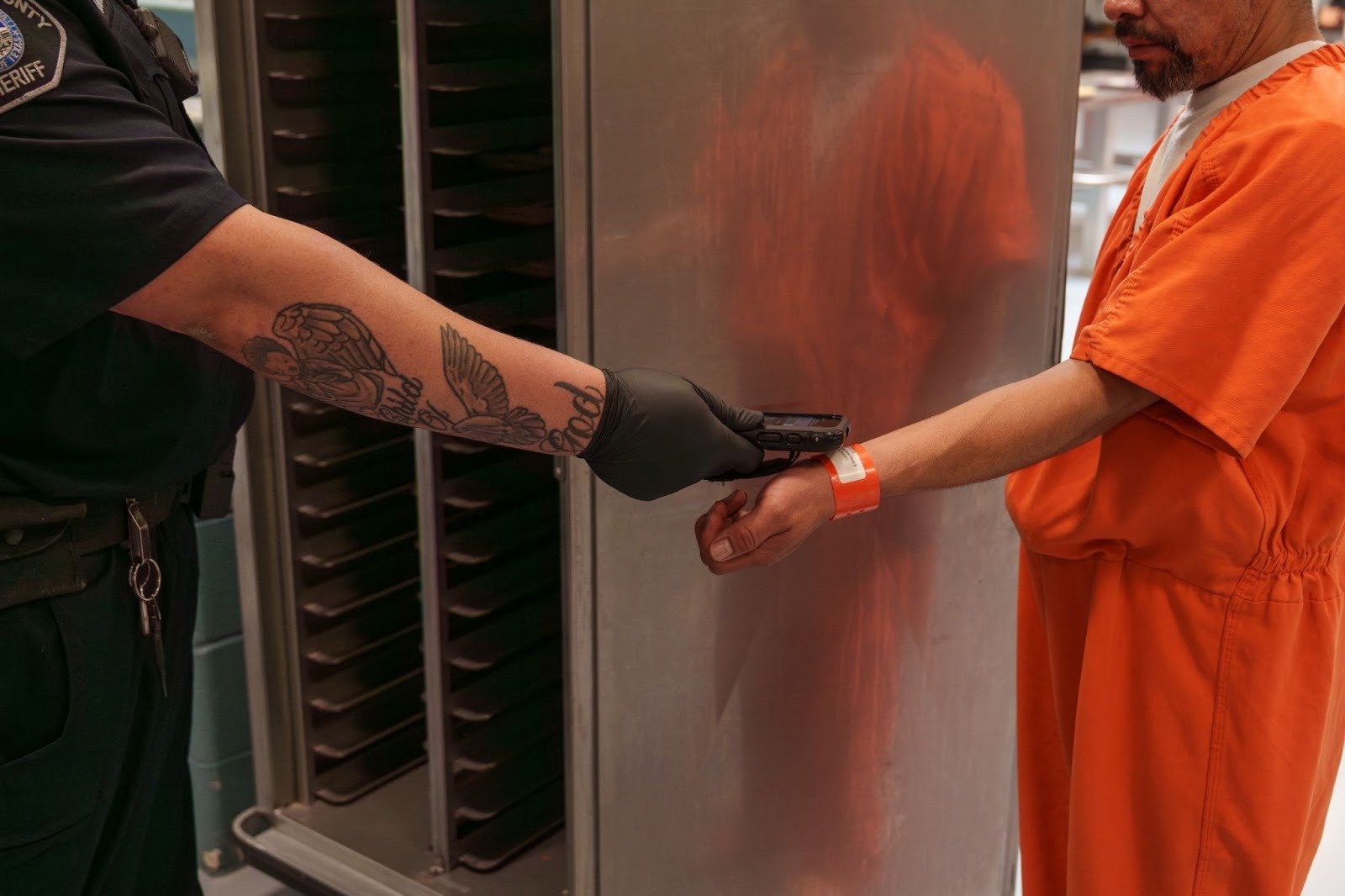
It’s chow time, and everyone knows the drill. Staff enter the pod with meal carts, and inmates begin lining up to receive their trays.
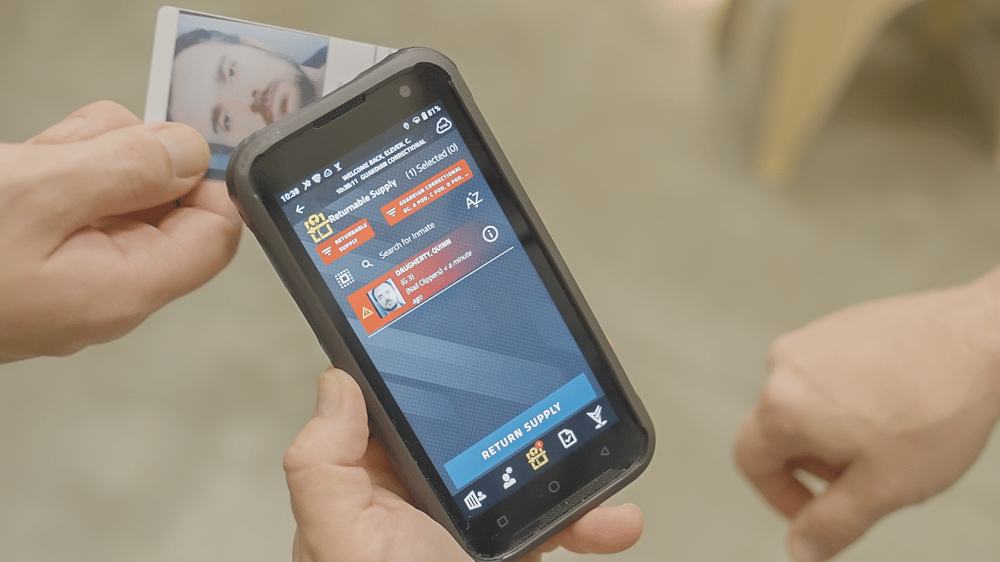
Facilities with Command Cloud streamline the meal passing process in a breeze. With Mobile Command XR in the palm of their hands, officers can scan each inmate’s ID in line to verify if they accepted or declined their meal.
The first inmate in line has their ID scanned and takes their tray. Mobile Command XR captures that this inmate accepted a meal.
The second inmate has their ID scanned, and an alert appears in Mobile Command XR flagging a dietary restriction. The officer provides the inmate with an appropriate Kosher meal, which they take. Mobile Command XR captures that this inmate accepted a meal.
The third inmate has their ID scanned, but tells the officer they are going to skip this meal as they aren’t hungry right now. Officers can use predetermined WordBlocks or manual entry to log why the meal was declined. Mobile Command XR captures that this inmate declined their meal and the reasoning.
The fourth inmate approaches the front of the line, takes a tray, and tells the officer they don’t have an ID to scan. What happens in this scenario?
This blog outlines the steps officers should follow to capture inmate data when the inmate doesn’t have identification available for verification.
Why is Inmate Identification Necessary?
Most state-level accreditation standards require that facility compliance is achieved, if not exceeded. At a state level, meeting compliance includes documentation that inmate needs are being met—such as being fed, given medication, provided sunlight or outdoor time, and offered hygiene supplies.
To ensure that inmate needs are being properly met, officers must verify which specific inmates receive which items. This is where inmate identification is paramount. Whether distributing meals, medications, hygiene supplies, or simply conducting headcounts, inmates must be able to identify themselves so staff can confirm that required resources were offered—and document whether those offers were accepted or declined.
In the event an inmate claims they were not fed or were not given their prescribed medications, inadequate documentation can place an agency in a detrimental lawsuit. Accurate, defensible records are essential to prove that meals and medications were provided, or at the very least, offered.
How Can Inmates Be Identified?
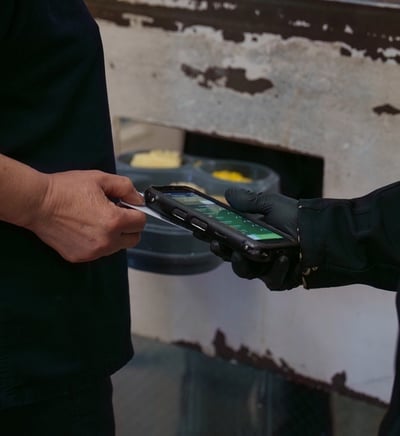 Gone are the days of pen and paper and manual documentation. Agencies that have upgraded their operations to include modernized inmate activity tracking technology are typically familiar with Command Cloud and its RFID scanning capabilities.
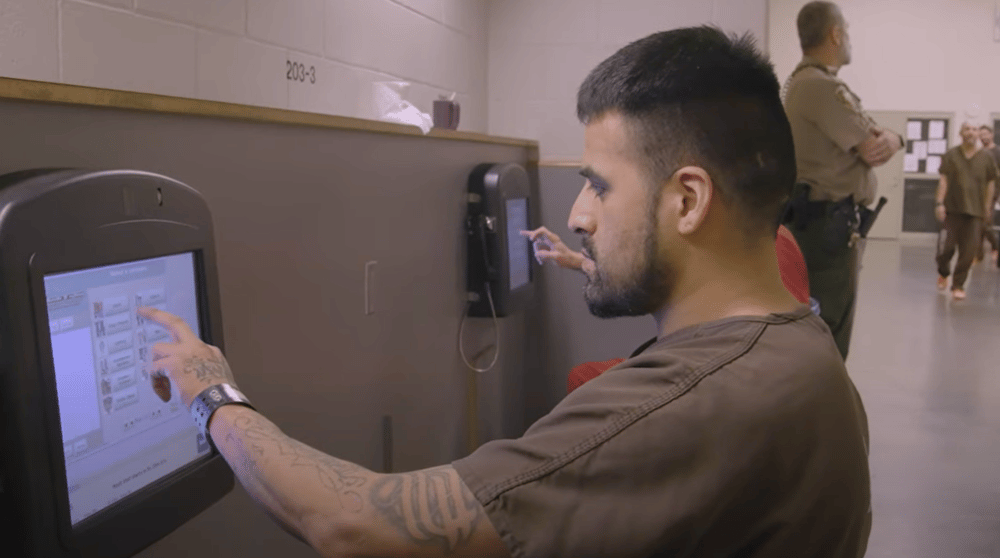
Facilities using Command Cloud require inmates to carry some form of identification, such as wristbands or ID cards. Both options are encrypted with RFID chips and allow for scanning from an RFID reader, typically via the SPARTAN.
Not only does inmate identification serve as a visual aid, but it also informs staff of inmate identity, date of birth, classification level, and other critical information. Both ID cards and wristbands provide quick access to this information, making scanning faster and easier. But what’s the difference between the two methods?
Wristbands
Inmate RFID wristbands are secure, durable, and cost-effective auto-identification tools. Encrypted with a unique digital fingerprint, each wristband is customized to the inmate by displaying their name, mugshot, and any other pertinent information that the facility deems fit. Wristbands are also available in eight different colors, allowing facilities to differentiate inmates with varying classifications.
Wristbands can last roughly five weeks when properly laminated and clamped with metal fasteners. They are constructed by placing printed inmate information onto a label or sheet of paper, which is then sent through a rolling laminator that uses heat to seal the identifying information into the wristband itself. With a crimping tool, the bands can be secured to inmates’ wrists with metal or plastic fasteners, although metal fasteners are the preferred option.
When done incorrectly, the wristband is more susceptible to water penetration or deliberate inmate tampering.

ID Cards
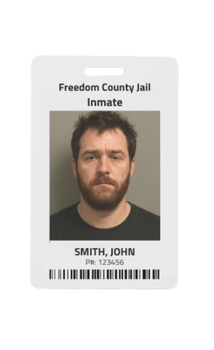 ID cards are exactly what they sound like. Just like a student or nurse ID card, these cards clip onto an inmate’s clothing (typically a shirt) so they’re easily visible to read and accessible to scan. Each inmate ID card has its own unique digital fingerprint, ensuring that no inmate can ever be associated with more than one ID card at a time.
When properly taken care of, an ID card can last for years, but will typically have a useful life of about 12 to 18 months. However, this is under the assumption that inmates handle their ID cards responsibly. If bent or tampered with, they will need to be replaced more frequently.
ID cards are exposed to water far less often than wristbands. For inmates who work in the kitchen, for example, wristbands are exposed to hot water, causing them to wear down more quickly. ID cards, on the other hand, are clipped to the inmate’s uniform, which greatly reduces direct moisture contact. This aids in the longevity of the ID card.
Which Identification Method Would Be Best For My Facility?
If you’re questioning which inmate identification method would be best for your facility operations and inmate population, the truth is, it depends.
Each correctional facility has its own operational priorities, and selecting the best option requires evaluating your unique needs. While the choice is ultimately yours, GUARDIAN RFID recommends ID cards for their durability and longevity.
Why? Wristbands are more commonly used in county jails than in prisons or juvenile facilities. This is primarily due to the limited useful life of wristbands, which aligns with the average length of time pre-trial adult offenders remain in custody. Pre-trial offenders do not always require long-lasting forms of inmate identification.
ID cards are often the preferred method of inmate identification for sentenced inmates and juvenile detention facilities that opt for identification. They are also frequently adopted by jails when past wristband efforts were unsuccessful, or their inmate identification is influenced by their state’s Department of Corrections’ use of inmate identification.
How Can Inmate Identification Be Enforced?
Enforcing inmate identification is up to the agency’s discretion. However, common practices include setting strict rules around ID ownership and consequences for tampering or destruction.
It is a best practice for staff to create and communicate swift consequences for any incident of non-compliance. This includes requiring the inmate to cover the cost of a replacement and losing privileges such as commissary, telephone and email usage, visitation, etc.
What Happens if an Inmate Doesn’t Have Their ID?
In scenarios where an officer needs to capture inmate data but the inmate in question doesn’t have their ID, officers must be diligent in manually documenting the data. Here is how an officer can accomplish that:
- Open Mobile Command XR on the SPARTAN device and select the appropriate module.
- Once inside the module, officers should scan the Hard Tag associated with the location where the inmate is assigned.
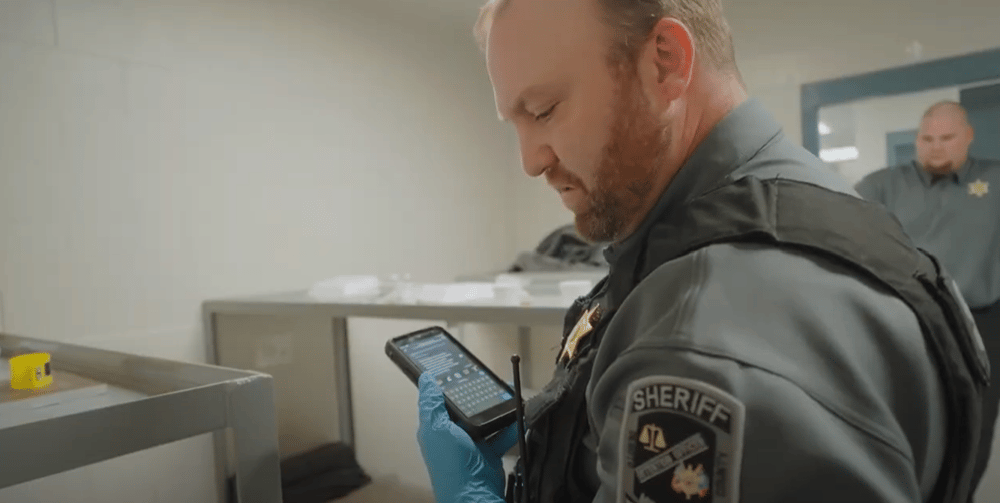
- A list of inmates assigned to that location will appear in Mobile Command XR. Scroll through the list until the specific inmate’s name appears. Select the name, then manually swipe to Accepted or Declined, or complete the required action prompted.
- To provide additional detail, the officer can tap the pencil icon on the inmate’s profile to add a manual note or select a WordBlock explaining why the data was captured manually. It is recommended to leave detailed notes when possible to document that action was taken when the inmate confirmed they did not have their identification. (The note can sound like, “Inmate Jones accepted a meal but did not have the ID card present. Inmate will be responsible for the costs of replacing his ID, and inmate will have his privileges commissary taken away until his new ID arrives.”)
While the extra steps required to document an inmate activity without proper identification may feel inconvenient, it’s still a major improvement over relying on pen and paper logs. This process is fast, straightforward, and fully defensible.
How often will officers need to rely on this backup process to document? Ideally, almost never. The goal is to rarely use this process, as inmates should be well aware of the repercussions that come with losing or damaging their identification.
However, the reality is clear: this isn’t a question of “if” this situation will arise; it’s a question of “when.” There will always be inmates who try to cut corners, push boundaries, and get away with not following instructions. That’s why this process ensures staff are prepared when that moment comes.
Inmate identification is the foundation of defensible, efficient correctional operations. When paired with Command Cloud, your team gains the flexibility to document every inmate interaction—scanned or manual—without sacrificing accuracy. No matter the situation, your staff can verify, record, and protect your facility with technology built for real-world challenges.